I still remember the first time I attempted an acorn squash casserole. It was one of those crisp October evenings when the air smells like woodsmoke and possibility, and I was determined to impress my future mother-in-law with something that screamed "I am harvest-season marriage material!" I bought the squash, the cream, the butter, the works. Then I proceeded to roast the squash until it resembled sad, stringy orange mittens, stirred in what I thought was "a splash" of cream (it was closer to a tidal wave), and baked the whole thing until it emerged as a watery, beige soup with floating crouton icebergs. My mother-in-law, bless her polite soul, took a bite, smiled, and said, "Well, it's... interesting." Translation: never again. I vowed right then to build the acorn squash casserole that would make her beg for the recipe instead of diplomatically requesting the salad next time.
Fast-forward seven autumns, countless experiments, and one small kitchen fire (note: parchment paper is not heatproof armor), and I finally cracked the code. This version is the cozy sweater of side dishes: velvety inside, bronzed on top, and aromatic enough to make your neighbors hover by your back door like cartoon aroma-zombies. We're talking squash that melts into custardy clouds, edges that shatter like thin ice, and a perfume of maple, sage, and toasted pecans that will travel through your vents and start family text threads before you even announce dinner is ready. Picture yourself pulling this out of the oven, the whole kitchen smelling like a woodland bakery where calories do not exist and calories definitely know their place.
Most recipes get this completely wrong. They drown the squash until it tastes like baby food, or they under-season and rely on a carpet of marshmallows to do the heavy lifting. Here's what actually works: roast first, custard second, crunch third. The squash needs to caramelize until its natural sugars bubble into dark freckles; otherwise you are just eating orange fiber paste. Then you bathe it in a silky, egg-thickened cream bath scented with nutmeg and maple—but not too much, or you veer into dessert territory. Finally, you crown it with a pecan-panko crumble that toasts while the casserole bakes so every bite has contrast: soft, crisp, sweet, salty, herby. I dare you to taste this and not go back for seconds; I have seen grown adults hover protectively over the serving dish like dragons guarding gold.
Stay with me here—this is worth it. The game-changer is a two-temperature bake that first sets the custard gently, then blasts the topping into mahogany glory. No more soggy streusel, no more curdled filling, no more awkward Thanksgiving silence where everyone politely chews and nods. Let me walk you through every single step—by the end, you'll wonder how you ever made it any other way.
What Makes This Version Stand Out
Roast-Then-Custard: Instead of boiling or steaming, we roast the squash halves cut-side down until the flesh bronzes and concentrates. That extra step evaporates excess moisture and builds a deep, almost toffee-like flavor you cannot fake with extra sugar.
Maple-Sage Alchemy: A modest pour of real maple syrup plus fresh sage steeped in warm cream gives you that farmhouse-fancy vibe without turning dinner into dessert. The herbal note keeps each forkful grounded and sophisticated.
Pecan-Panko Crunch: Forget marshmallows. We toss chopped pecans with panko, orange zest, and a whisper of cayenne for sparkle. It toasts on top like a savory granola, creating audible crunch that plays against the custard below.
Two-Temperature Bake: Low oven first (gentle custard), high oven last (cracker-crisp lid). Most recipes pick one temp and end up with either scrambled eggs or pale mush. We refuse such compromises.
Make-Ahead Magic: You can roast the squash a day ahead, whisk the custard, and store them separately. Assemble and bake when company arrives, which means you get to look relaxed while everyone else frantically mashes potatoes.
Leftover Flexibility: Cold, it slices like pie and makes an incredible breakfast with black coffee. Warm, it re-heats like a dream with a splash of cream and five minutes in a skillet. No rubbery microwave tragedies here.
Convertible Comfort: Vegetarians rejoice as-is; add crispy pancetta for the meat lovers; swap coconut milk and gluten-free crumbs for dairy-free folks. One base, infinite applause.
Alright, let's break down exactly what goes into this masterpiece...
Inside the Ingredient List
The Flavor Base
Acorn squash is the star, but not all squash are created equal. Look for specimens that feel heavy for their size, with matte, deep-green skin and a single blaze of orange on the belly—the sugar spot. If the skin is glossy or the squash sounds hollow when tapped, it was picked too early and will taste like stringy cucumber. A ripe one smells faintly sweet at the stem and gives slightly under your thumb, like a good avocado. Roast it until the edges blacken; those dark bits are pure umami gold.
The Texture Crew
Heavy cream provides the luxurious body, but you need egg yolks to transform it into silken custard. Skimp on yolks and the sauce coats the squash like thin milk; add too many and you're eating pumpkin pie flan. I use two yolks plus one whole egg for structure. Whole milk lightens things so the dish doesn't sit in your stomach like holiday cement. If you've ever struggled with gloppy casseroles, you're not alone—and I've got the fix: warm the dairy first so the eggs temper smoothly instead of scrambling.
The Unexpected Star
Fresh sage is autumn's version of smelling salts: earthy, piney, instantly transporting. I bruise the leaves between my palms before steeping them in hot cream, releasing chlorophyll and essential oils. Dried sage tastes like dusty potpourri here, so skip it. No sage in the store? Use thyme plus a tiny pinch of ground rosemary. The goal is woodsy perfume, not pizza seasoning.
The Final Flourish
Orange zest wakes everything up with citrus oil, while a trace of cayenne makes flavors bloom without announcing "hot." Pecans bring buttery crunch, but if you're watching pennies, walnuts work—just toast them first to shoo away any bitterness. Panko stays crisper than regular breadcrumbs because it's made from crustless bread, giving you those crispy edges that shatter like thin ice when your fork hits them.
Everything's prepped? Good. Let's get into the real action...
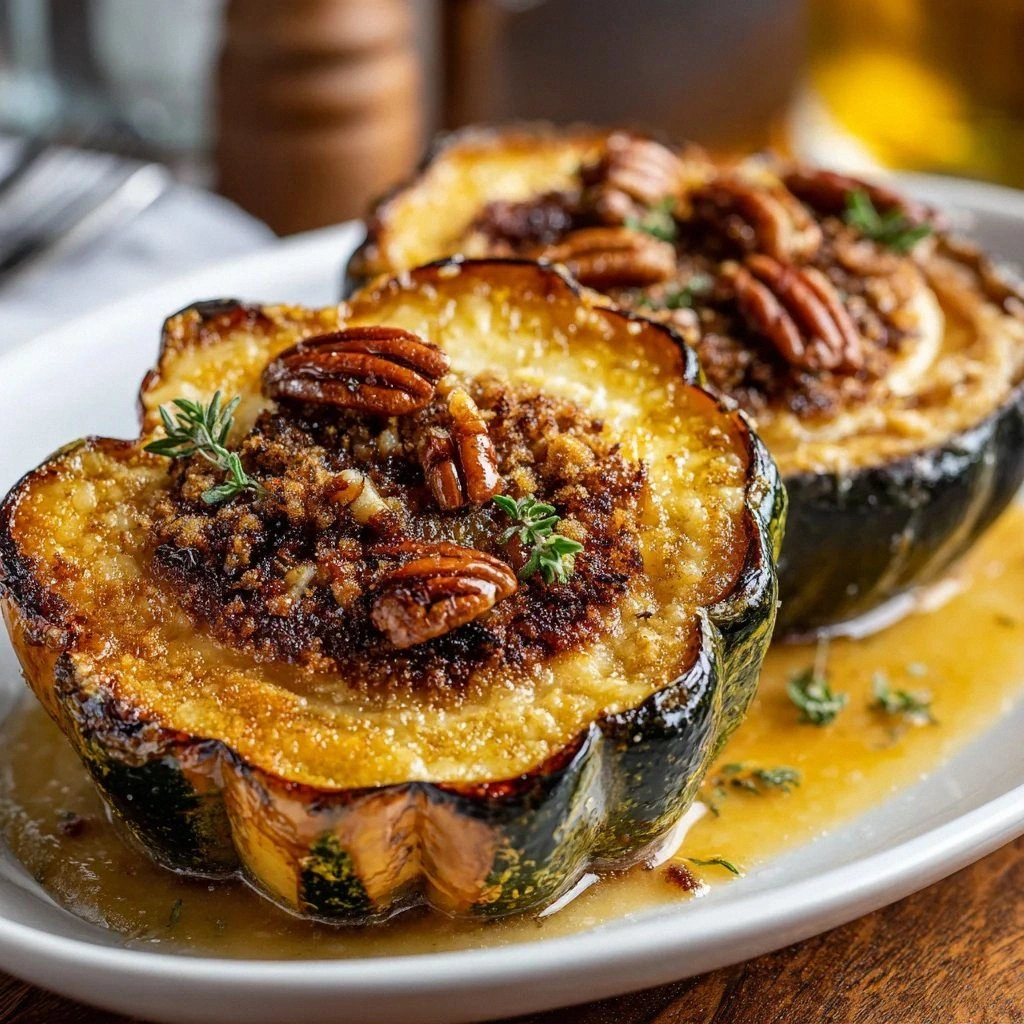
The Method — Step by Step
- Preheat your oven to 425°F (220°C) and position a rack in the center. Line a rimmed sheet pan with parchment for easy cleanup. Halve the acorn squash lengthwise and scoop out the seeds with a sturdy spoon; don't worry about stringy bits—they'll melt during roasting. Rub the cut surfaces with a teaspoon of neutral oil, then place them cut-side down on the sheet. The sizzle when it hits the pan? Absolute perfection. Roast for 25-30 minutes, until the flesh yields completely when pressed and the rims are freckled with brown.
- While the squash roasts, start the custard base. Pour one cup of heavy cream and a half-cup of whole milk into a small saucepan. Add six fresh sage leaves, a strip of orange peel (avoid the bitter white pith), and two tablespoons of real maple syrup. Warm over medium heat until tiny bubbles appear around the edge—about 180°F if you own a thermometer. Remove from heat, cover, and let the sage steep like tea while the squash finishes. The cream will blush the palest green and smell like a Vermont forest; that's when you know magic is happening.
- Scoop the roasted squash into a mixing bowl, leaving the skin behind like a discarded cloak. Mash with a potato masher until smooth but still rustic—some tiny lumps give character. Measure out two packed cups; snack on any extra with a pat of butter and a sprinkle of salt. I'll be honest—I ate half the batch before anyone else got to try it. Reduce the oven to 325°F (165°C) so the custard cooks gently without curdling.
- Strain the infused cream into a measuring cup, pressing the sage to extract every drop of flavor. Whisk in two egg yolks, one whole egg, half a teaspoon of kosher salt, a quarter teaspoon of freshly grated nutmeg, and a pinch of cayenne. The mixture should be the color of antique velvet and coat a spoon like heavy cream—because that's exactly what it is. Pour this liquid gold over the mashed squash and fold just until combined; over-mixing introduces air bubbles that will haunt your final texture.
- Butter a two-quart casserole dish, then dust it with a spoonful of sugar. The sugar melts during baking and forms a micro-crust that keeps the custard from sticking. Spread the squash mixture in an even layer, smoothing the top like you're frosting a cake. Tap the dish on the counter to pop hidden bubbles; they rise like little submarines breaking surface. This next part? Pure magic.
- For the pecan-panko crunch, melt two tablespoons of butter in a skillet over medium heat. Toss in three-quarters cup panko, half a cup of chopped pecans, the zest of half an orange, a pinch of salt, and a pinch of cayenne. Stir constantly for three to four minutes until the crumbs turn golden and smell like toasted hazelnuts. Watch this like a hawk; panko goes from tan to charcoal in the blink of a TikTok scroll.
- Sprinkle the toasted mixture evenly over the custard, pressing gently so it adheres but still forms peaks and valleys. Those peaks will bronze into crispy crags while the valleys stay gooey—textural drama on every forkful. Slide the dish onto a foil-lined baking sheet to catch any rebellious drips. Now the fun part: bake at 325°F for 20 minutes, then bump the oven to 400°F (205°C) for the final ten. This two-stage bake sets the custard slowly and toasts the topping quickly, giving you a perfectly creamy interior and a crunchy lid.
- The casserole is done when the edges puff like a soufflé and the center jiggles like set Jell-O when you nudge the pan. A knife inserted two inches from the edge should come out clean; the very center can still look creamy. Let it rest for five minutes—this is the moment when custard firms up and flavors marry. Serve hot, warm, or even room temperature alongside roast chicken, pork loin, or a mountain of garlicky greens. And now the fun part: watch people close their eyes after the first bite, because that involuntary eye-close is the universal sign of "I was not expecting this level of cozy."
That's it—you did it. But hold on, I've got a few more tricks that'll take this to another level...
Insider Tricks for Flawless Results
The Temperature Rule Nobody Follows
Room-temperature eggs and dairy mix without seizing, so pull them from the fridge 30 minutes ahead. Cold eggs hit warm cream and instantly scramble into tiny flecks that look like confetti—great for a birthday, awful for custard. If you forget (we all do), submerge whole eggs in warm tap water for five minutes while the cream steeps. Your future self will thank you when the custard emerges silken instead of curdled.
Why Your Nose Knows Best
Trust aroma checkpoints more than timers. When the squash smells like roasting marshmallows, it's ready. When the pecan topping smells like toasted pralines, it's done. Ovens vary, squash sizes vary, but your nose is calibrated to delicious. A friend tried skipping this step once—let's just say it didn't end well, and her smoke alarm now doubles as a dinner bell.
The 5-Minute Rest That Changes Everything
Resting isn't optional; it's the difference between elegant slices and a spoonable mess. During those five minutes, carry-over heat finishes the custard while starch molecules relax and absorb any free liquid. Cover loosely with foil to keep it warm, but vent one corner so steam doesn't sog your beautiful crumble. Serve in confident squares using a hot knife (dip in hot water, wipe dry) for restaurant-level presentation.
Creative Twists and Variations
This recipe is a playground. Here are some of my favorite ways to switch things up:
Bourbon-Bacon Brunch Edition
Replace maple syrup with two tablespoons of bourbon and one tablespoon of brown sugar. Fold in four strips of crisp, chopped bacon before baking. The alcohol cooks off, leaving smoky caramel notes that pair scandalously well with strong coffee and regret-free Sunday mornings.
Chipotle-Coconut Southwest
Swap heavy cream for full-fat coconut milk and add a minced chipotle in adobo to the custard. Use toasted pepitas instead of pecans and lime zest instead of orange. The result is a sweet-smoky-creamy side that holds its own beside chili-rubbed steak or black-bean tacos.
Savory Herb & Gruyère
Omit maple syrup entirely and fold in half a cup of shredded Gruyère plus a tablespoon of Dijon mustard. Top with buttery rye-bread crumbs and fresh thyme. It morphs from side dish to vegetarian main that even carnivores hoard.
Miso-Ginger Umami Bomb
Whisk one tablespoon of white miso and a teaspoon of grated fresh ginger into the cream. Finish with sesame-panko and sliced scallions. The savory depth makes it a stellar companion to glazed salmon or sesame-crusted tofu.
Apple-Cheddar Picnic Squares
Layer thin slices of tart apple between squash and custard, then fold shredded sharp cheddar into the topping. Bake until the cheese oozes into the crumble and forms frico-like lace. Pack it lukewarm for tailgates—no fork required.
Mini Jack-O'-Lanterns
For Halloween, roast baby acorn squash halves, fill with custard, add faces made from black sesame seeds, and bake as directed. Kids lose their minds over edible pumpkin faces, and adults appreciate the portion control (or second helpings).
Storing and Bringing It Back to Life
Fridge Storage
Cool completely, then cover tightly with plastic wrap or transfer to an airtight container. It keeps four days without textural decline, after which the topping softens but the flavor still beats takeout. Press wrap directly against the surface to prevent a skin from forming; nobody wants squash pudding with onion-paper on top.
Freezer Friendly
Portion into freezer-safe containers, leaving half an inch of headspace for expansion. Freeze up to two months. Thaw overnight in the fridge, then reheat gently. The topping won't stay shatter-crisp, but a quick stint under the broiler resurrects most of its charm. Pro tip: freeze individual servings in silicone muffin cups, pop them out, and store in a zip bag—easy grab-and-go comfort for solo dinners.
Best Reheating Method
Warm individual servings in a non-stick skillet over medium-low heat with a splash of water and a tight lid. The steam revives the custard while the bottom re-crisps like a dessert fritter. Microwave works in a pinch—cover with a damp paper towel and heat at 70% power in 30-second bursts—but expect a slightly chewier topping. Add a tiny splash of water before reheating—it steams back to perfection and keeps edges from turning into rubber coasters.