Picture this: it was a rainy Tuesday night, the kind where the wind howls like it’s auditioning for a horror movie, and I was standing in my kitchen in mismatched socks, staring at a bag of potatoes and a block of cheese like they owed me money. I’d promised my friends a “show-stopping” comfort dish for game night, but the truth? I had zero plan, zero energy, and one very hangry cat weaving between my ankles. So I did what any self-respecting food lover would do: I threw caution, calorie counts, and half my dairy drawer into one baking dish and prayed to the culinary gods. What emerged forty-five minutes later was a bubbling, golden-crusted miracle so outrageously creamy that I burned my tongue twice—twice—because I couldn’t wait five minutes for it to cool. That first bite tasted like every couch blanket I’ve ever cocooned myself inside, wrapped around a molten core of nostalgia and pure, unapologetic cheese.
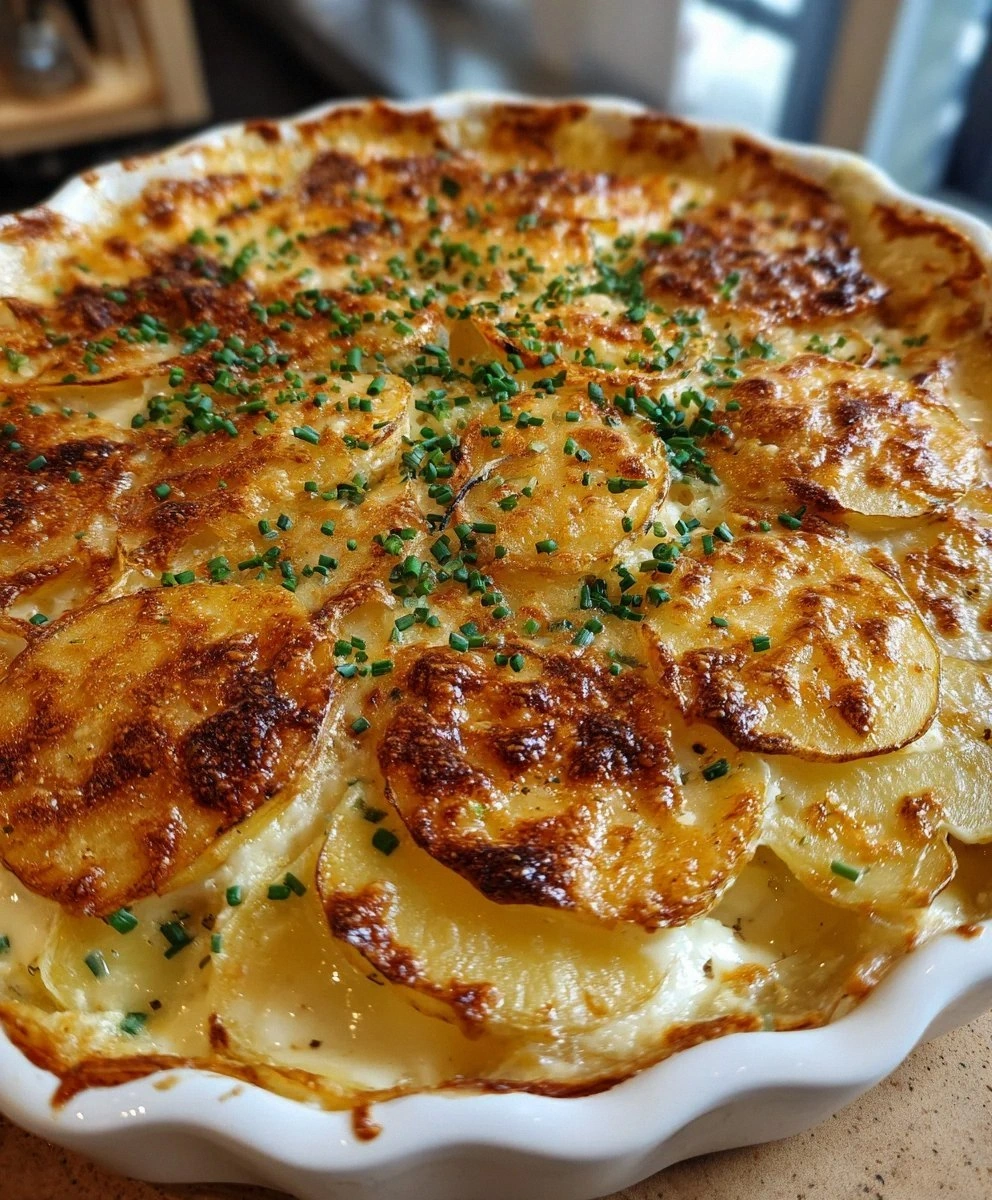
Fast-forward through three recipe-testing binges, two broken spatulas, and one extremely judgmental neighbor knocking on the wall at 1 a.m. because I kept “testing the acoustics of my oven timer,” and here we are. This Creamy Cheese and Potato Pie is hands-down the best version you’ll ever make at home—bold claim, I know, but I’m prepared to duel anyone who says otherwise with a fork. It’s the edible equivalent of sliding into a hot bath after a marathon: the potatoes surrender like velvet, the cheese sauce coats every nook like liquid satin, and the top crisps into those irresistible lacy edges that shatter like thin ice under your spoon. I dare you to taste this and not go back for seconds; I’ve failed that challenge every single time, and once hid the leftovers behind kale so my housemates wouldn’t find them.
Most recipes get this completely wrong—they either water-down the sauce (traitors) or they pre-boil the potatoes into mushy submission (why bother living?). We’re not doing either. Instead, we’re thin-slicing spuds so they cook in the oven while drinking up every ounce of garlicky, thyme-kissed cream, and we’re using a two-cheese strategy that melts like a dream yet still browns like a superstar. Future pacing moment: picture yourself pulling this out of the oven, the whole kitchen smelling like a French alpine chalet, your friends hovering like seagulls at a beach picnic. Stay with me here—this is worth it. Let me walk you through every single step—by the end, you’ll wonder how you ever made it any other way.
What Makes This Version Stand Out
Cheese Strategy: We’re blending nutty Gruyère for depth and young Gouda for stretch, creating a flavor tango that’s both complex and comfortingly familiar. Other recipes lean on one-dimensional cheddar and call it a day—sweetheart, we deserve better.
Texture Theater: Paper-thin potato slices layered like edible lace ensure every forkful is silky, never stodgy. No pre-boiling means the spuds stay intact and absorb the sauce like little carb sponges.
One-Pan Simplicity: No precooking the sauce on the stove; we whisk, layer, and bake. The oven does the heavy lifting while you pour yourself a glass of wine and pretend you’re on a cooking show.
Crustless Confidence: Ditching pastry slashes both prep time and dishes, plus it lets the cheesy crown form those crave-worthy crispy edges that make grown adults fight over corner pieces.
Crowd Reaction: I’ve served this at potlucks where people literally stopped mid-conversation, eyes wide, to ask what sorcery just happened. One friend tried to smuggle a portion out in her handbag.
Make-Ahead Magic: Assemble it the night before, cover tight, and bake straight from the fridge the next evening—perfect for feeding hangry teenagers or impressing a date without the stress.
Ingredient Integrity: We’re talking real cream, real butter, real cheese. None of that “low-fat alternative” nonsense; if you want to skimp, make a salad instead.
Alright, let’s break down exactly what goes into this masterpiece...
Inside the Ingredient List
The Flavor Base
Heavy cream is the velvet carriage that carries every other flavor; don’t you dare reach for half-and-half unless you want a sad, watery puddle. Fresh garlic, finely grated on a Microplane, disperses like savory fairy dust rather than chunky firebombs. A whisper of freshly grated nutmeg warms the background, making people ask “what’s that cozy note I can’t place?” Sea salt amplifies the cheese rather than making the dish taste salty—think of it as the backstage crew, not the star.
The Texture Crew
Yukon Gold potatoes are the goldilocks of spuds: waxy enough to hold their shape, fluffy enough to melt on your tongue. Peel them if you must, but I leave the jackets on for a rustic bite and extra nutrients—lazy meets virtuous. A mandoline slicer turns the task into a thirty-second drum solo; if you’re knife-only, channel your inner Iron Chef and aim for ⅛-inch coins. Overlap them like fish scales so the cream can weave through every layer, creating a self-basting tower of creamy perfection.
The Unexpected Star
A single bay leaf tucked between layers perfumes the whole pie with herbaceous intrigue; remove it before serving or someone will think you’re feeding them yard clippings. White pepper adds gentle heat without black speckles—visual sleight of hand for the skeptics who swear they “don’t like spicy food.” A squeeze of lemon juice right into the cream brightens all that richness, the culinary equivalent of opening a window on a stuffy day.
The Final Flourish
Gruyère brings nutty complexity, while young Gouda gives that Instagram-worthy cheese pull—together they melt at slightly different rates, creating strata of gooey and stretchy. A light dusting of Parmigiano-Reggiano on top forms a crackly umami crust that tastes like the edge of a pizza met a French onion soup. Finish with a shower of fresh chives so you can claim there’s something green and therefore “healthy” in here.
Everything's prepped? Good. Let's get into the real action...
The Method — Step by Step
- Preheat your oven to 375°F (190°C). I know every recipe says this first, but seriously, cold ovens are the arch-nemesis of golden crusts; give it a solid twenty minutes to climb to temp while you slice. Rub a 9-inch baking dish with the butter wrapper you were about to toss—waste not, plus it leaves a whisper-thin layer that encourages browning and prevents the dreaded cheese weld.
- Whisk together cream, garlic, nutmeg, salt, white pepper, and lemon juice in a large spouted measuring cup until homogenous. The acid will thicken the cream ever so slightly, a neat bit of dairy chemistry that helps it cling to the potatoes later. Take a quick sniff—your kitchen should already smell like a French bistro in the making.
- Using a mandoline set to ⅛ inch, slice the potatoes directly into the cream mixture, submerging them as you go to prevent oxidation. Think of it as a spa bath for starch; they’ll stay creamy-white rather than that sad gray-brown that screams “I’ve been sitting out since the Clinton administration.”
- Grate your cheeses and keep them in separate piles—this isn’t just culinary OCD; different melting points matter later. Toss the Gruyère with a teaspoon of flour; this old pastry-chef trick prevents the fats from separating, so you don’t end up with an oily puddle that looks like it’s crying.
- Begin layering: a splash of cream on the bottom, then potato shingles overlapping by half, then a snowfall of Gruyère, repeat until you run out. Press down gently after each layer to coax out air pockets—think of it as building a lasagna of comfort. Nestle the bay leaf somewhere in the middle strata like a buried treasure.
- When you reach the top, pour any remaining cream evenly over the surface, then blanket with Gouda and finish with the Parm. The pie should look like it’s wearing a golden sweater. Tap the dish on the counter to settle everything; that gentle thud is the sound of future deliciousness.
- Spritz a sheet of foil with nonstick spray—this prevents the cheese from hitching a ride when we tent it later. Cover tightly, then bake on the middle rack for 25 minutes. Your house will start smelling like a Swiss chalet during fondue season; neighbors may spontaneously appear with empty plates.
- Uncover and bake another 20–25 minutes until the top is blistered and the center bubbles like hot lava. If you’ve ever struggled with watery potato bakes, you’re not alone—and I’ve got the fix: that final blast of uncovered heat evaporates excess moisture while the cheese bronzes. Don’t walk away from the oven here; the line between bronze and burnt is thinner than my patience at a toddler birthday party.
- Rest the pie for ten minutes; this is the hardest part, but it allows the cream to thicken so your slices hold together like dignified adults instead of collapsing into cheesy mashed potatoes. Use this downtime to set the table, pour drinks, and practice your humble “oh, this old thing?” face when compliments roll in.
That's it—you did it. But hold on, I've got a few more tricks that'll take this to another level...
Insider Tricks for Flawless Results
The Temperature Rule Nobody Follows
Room-temperature cream blends seamlessly with the potatoes, preventing that grainy, curdled look that screams “I rushed.” Pull the cream from the fridge while you preheat the oven; by the time you whisk, it’s cozy and ready to mingle. Cold dairy hitting hot metal equals drama, and not the fun reality-TV kind.
Why Your Nose Knows Best
When the scent shifts from milky to nutty caramel, your pie is thirty seconds from perfect. Trust the aroma more than the clock—ovens vary like snowflakes, but your olfactory bulb never lies. I once saved a Thanksgiving side dish because I caught that toasty perfume just in time.
The 5-Minute Rest That Changes Everything
Cover the pie loosely with foil after baking and let it nap for five extra minutes; the residual heat finishes the center without over-browning the top. A friend tried skipping this step once—let’s just say it didn’t end well, and we ate her portion with pitying looks.
Cheese Grater Upgrade
Swap your box grater for the fine side of a Microplane on the Parm; it creates feathery wisps that crisp into lacy frico, adding shatter-texture drama. Bonus: you’ll feel like you’re starring in your own cooking montage.
Leftover Rescue
If you somehow have leftovers, cube them cold and pan-fry in butter until the edges caramelize; it’s essentially cheesy potato croquettes without the fussy breading. I’ll be honest—I ate half the batch before anyone else got to try it, standing over the stove in pajama pants.
Creative Twists and Variations
This recipe is a playground. Here are some of my favorite ways to switch things up:
Smoky Bacon & Cheddar Canyon
Fold in crumbled crispy bacon between layers and swap Gruyère for sharp white cheddar. The smoky pork fat perfumes the cream, making grown men weep into their napkins. Finish with a drizzle of maple for that campfire breakfast vibe.
Spicy Southwest Fiesta
Add a minced chipotle in adobo to the cream and swap Gouda for pepper Jack. A handful of roasted corn kernels brings sweet pops against the heat. Top with fresh cilantro and a squeeze of lime—suddenly you’re at a rooftop cantina.
Herb Garden Spring Fling
Replace bay leaf with fresh tarragon and chervil, and use goat cheese instead of Parm for tangy brightness. Thin asparagus tips poked upright through the top layer turn the pie into an edible bouquet. Perfect for brunch when you want to feel fancy but still eat carbs.
Truffle & Mushroom Midnight Indulgence
Sauté sliced cremini in butter until golden, layer them in, and add a whisper of truffle oil to the cream. Use fontina for extra funk. Serve this at a dinner party and watch people suddenly become very polite in hopes of a second helping.
Breakfast-for-Dinner Deluxe
Create four wells in the top during the last ten minutes of baking and crack eggs into them; return to oven until whites set but yolks stay runny. A scattering of everything-bagel seasoning on top makes it taste like your favorite deli merged with your brunch dreams.
Storing and Bringing It Back to Life
Fridge Storage
Cool completely, then cover tightly with foil or transfer to an airtight container; it keeps four days refrigerated without textural drama. Pro tip: cut it into portions first so you can reheat only what you need—nobody wants to re-bake the whole pie for one late-night craving.
Freezer Friendly
Wrap individual slices in plastic, then foil, and freeze up to two months. Thaw overnight in the fridge; the cream stabilizes beautifully because we used full-fat dairy—none of that grainy separation nonsense. Reheat at 350°F until center bubbles, about fifteen minutes.
Best Reheating Method
Add a tiny splash of water to the baking dish and cover with foil; the steam brings it back to life like a disco ball spinning Saturday Night Fever. For extra crunch, uncover for the last three minutes to re-crisp the top. Microwave works in a pinch, but the oven keeps the potatoes dignified.