Last Tuesday, I stood in my kitchen at 6:47 p.m., rain lashing the windows like an over-caffeinated drummer, holding a sad, gray cube of grocery-store beef and wondering how dinner had become a hostage negotiation with my own taste buds. My Instant Pot sat in the corner like a smug little spaceship, my Dutch oven glowered from the stove, and I had exactly one hour before my friends arrived expecting something that didn’t taste like boiled disappointment. I’d promised them “the coziest beef stew on the planet,” but every recipe I’d tried before turned out either watery, chewy, or—worse—both. So I did what any self-respecting food nerd would do: I cracked open three cookbooks, scrolled past seventeen food-blog novels, and started treating my kitchen like a crime scene. I seared, I deglazed, I tasted, I cursed, I added a pinch of this, a splash of that, and at 8:02 p.m. I lifted the lid on something so fragrant it made my neighbor’s dog start howling in solidarity. The beef surrendered at the tap of a fork, the broth shimmered like liquid garnet, and the vegetables had somehow turned into velvet-clad nuggets of sweet comfort. My friends silence-spooned their way through two bowls each, then demanded the recipe in a group text at midnight. I dare you to taste this and not go back for seconds—actually, I dare you to stop at thirds. Picture yourself pulling this out of the oven, the whole kitchen smelling like a fireplace wrapped in a blanket, while the rain keeps drumming and you finally understand why humans invented bowls. Stay with me here—this is worth it. Let me walk you through every single step—by the end, you’ll wonder how you ever made it any other way.
What Makes This Version Stand Out
Beef That Melts: We’re talking chuck roast that’s been seared until the edges caramelize into tiny meat marshmallows, then slow-braised until the collagen breaks down into gelatinous gold. Skip the pre-cut “stew meat” that supermarkets toss in mystery trimmings; you want a single, well-marbled shoulder you can cube yourself.
Two-Stage Depth: Most recipes dump everything in at once and pray. Here we build flavor in layers—first a hard sear on the beef, then a gentle sweat on the aromatics, then a tomato-paste toast that turns brick-red and smells like sun-dried summers. Each step leaves flavor freckles on the bottom of the pot that we later deglaze into the stew.
Wine, But Make It Optional: I love the fruity complexity of a cheap Côtes du Rhône, but I tested this with pomegranate juice and it still sang. The point is acidity and fruit notes, not alcohol buzz. If you’re cooking for kids or teetotalers, you’ll still get a restaurant-level braise.
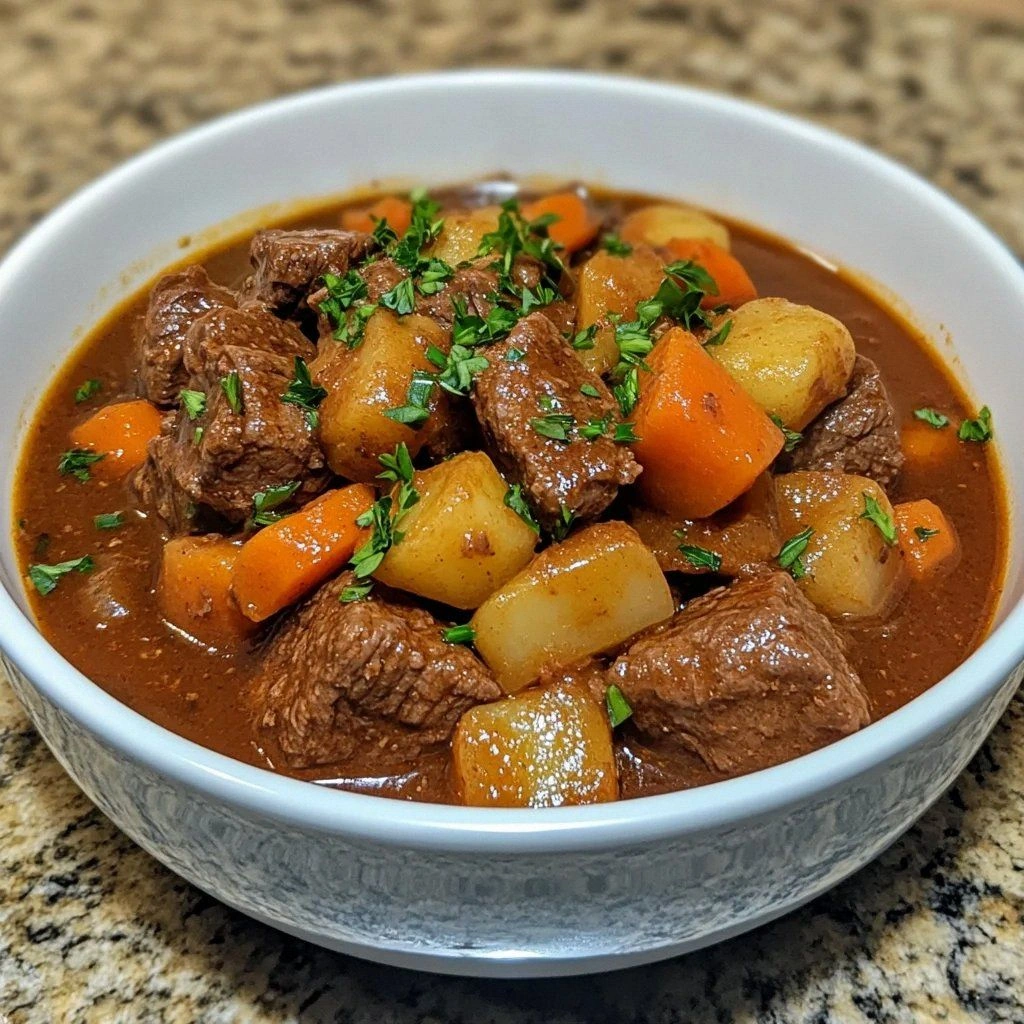
Vegetables That Keep Their Dignity: Carrots stay coins, potatoes stay cubes, peas pop like caviar. We stagger the additions so nothing dissolves into baby-food mush. You’ll actually taste each ingredient instead of a homogeneous brown blur.
Herbs That Work Overtime: Dried thyme and rosemary go in early to perfume the broth, then we finish with fresh parsley for a grassy high note. It’s like stereo sound for your tongue—bass and treble in perfect balance.
Make-Ahead Magic: This stew tastes even better after a 24-hour nap in the fridge. The flavors marry, the fat rises and solidifies so you can lift it off, and reheating is literally a 5-minute microwave away from comfort. I’ve served it at dinner parties straight from frozen; guests assumed I’d been slaving all day.
Inside the Ingredient List
The Flavor Base
Beef chuck is the undisputed king of winter braises because it’s shot through with collagen that melts into unctuous silk. Skip lean sirloin unless you enjoy chewing leather shoelaces. When you brown the cubes, leave them untouched for 90 seconds per side; that crust is pure umami glitter. If you absolutely can’t find chuck, short ribs work but cost twice as much and you’ll need to fish out the bones later—worth it for date night, overkill for Tuesday.
The Texture Crew
Onion, carrot, potato—the holy trinity of rib-sticking comfort. I use yellow onion for its balance of sweetness and sulfur, carrots cut into thick coins so they stay al dente, and Yukon Gold potatoes because their thin skin means no peeling and their waxy flesh holds shape. Russets dissolve and turn cloudy; red potatoes stay too firm and feel like marbles. Size matters: ¾-inch carrot coins and 1-inch potato cubes give you fork-friendly bites that don’t vanish into the gravy.
The Unexpected Star
Tomato paste is the secret weapon most home cooks under-use. We’re not making marinara here—just two tablespoons, fried in the beef fat until it turns from bright scarlet to brick brown. That caramelization removes raw acidity and adds a whisper of sweetness that makes the whole stew taste mysteriously deeper. If you’re out, a teaspoon of miso paste works similarly, but then your kitchen smells like a ramen bar.
The Final Flourish
Frozen peas go in at the very end so they stay emerald and pop between your teeth. Fresh peas are lovely but rarely available outside spring, and canned peas are mushy little lies. A shower of chopped parsley just before serving wakes everything up with chlorophyll brightness. Skip it and the stew still comforts, but with it you get a spring-green high note that makes you feel clever.
The Method — Step by Step
- Pat the beef cubes bone-dry with paper towels; moisture is the enemy of browning. Heat olive oil in a heavy Dutch oven over medium-high until it shimmers like a mirage. Add half the beef in a single layer—crowding steams instead of sears—and let it sizzle untouched for 90 seconds. When you peek and see a mahogany crust lifting from the pan, flip and repeat. Remove to a plate; fond (those sticky brown bits) equals free flavor. Repeat with remaining beef. Your kitchen should smell like a steakhouse had a baby with a campfire.
- Drop the heat to medium and toss in chopped onion. Scrape the bottom with a wooden spoon so the onion juices deglaze the pan, lifting the beef freckles into the fat. Cook until the edges turn translucent and the center still has a whisper of crunch, about 4 minutes. Add garlic; 30 seconds later your house will smell good enough to bottle as cologne.
- Stir in tomato paste and cook, smearing it across the bottom, until it darkens two shades and smells faintly sweet—another 2 minutes. This is the moment of truth; walk away and it burns faster than a TikTok trend.
- Hit the pot with red wine (or pomegranate juice). It will hiss like a vampire at sunrise and lift every last bit of caramelized magic. Let it bubble for 2 minutes so the alcohol cooks off but the fruit lingers. If you’re sober-curious, swap in ¾ cup grape juice plus ¼ cup balsamic vinegar for tang.
- Return beef and any juices to the pot. Add beef broth, thyme, rosemary, bay leaves, and a hefty pinch of salt and pepper. The liquid should just cover the meat; if not, add water or more broth. Bring to a gentle simmer—barely burping bubbles—then clamp on the lid, drop heat to low, and go watch an episode of whatever show you’re binging. Come back in 90 minutes; the beef should yield to a gentle poke.
- While the stew murmurs away, prep your vegetables. Slice carrots on the bias into ¾-inch coins so they look fancy even if you’re wearing sweatpants. Dice potatoes into 1-inch cubes and hold them in a bowl of salted water so they don’t oxidize into gray sadness. Pat dry before adding later.
- After 90 minutes, lift the lid and meet your new best friend: a glossy, burgundy pool that smells like Sunday at Grandma’s house if Grandma had a Michelin star. Fish out the bay leaves; they’ve done their aromatic duty. Stir in carrots and potatoes, re-cover, and simmer another 25 minutes. Don’t crank the heat; gentle bubbles keep potatoes intact.
- Test a potato cube with a paring knife—it should slide in with zero resistance but not disintegrate into the broth. If you’ve ever struggled with mushy veg, you’re not alone—and I’ve got the fix: timing, not temperature. Now fold in frozen peas; they’ll thaw in 60 seconds and stay bright. Taste the broth; it should make you close your eyes involuntarily. Adjust salt until it sings.
- Off the heat, shower with parsley and crack fresh black pepper from way up high like a dramatic salt bae. Let the stew rest 5 minutes; it thickens slightly as it cools and the flavors settle. Ladle into deep bowls, serve with crusty bread for mopping, and watch grown adults fight over the last spoonful of gravy.
Insider Tricks for Flawless Results
The Temperature Rule Nobody Follows
Most home cooks crank the heat when they’re impatient. Resist. The liquid should barely tremble—think jacuzzi bubbles, not jacuzzi party. If it’s rolling, collagen tenses instead of relaxing, and you’ll end up with beef that squeaks between your teeth. A friend tried rushing mine once; we chewed in awkward silence for ten minutes.
Why Your Nose Knows Best
Smell is 80 % of flavor. When the tomato paste hits the pan, inhale deeply; when it stops smelling raw and starts smelling like sun-dried fruit, you’re golden. Same with wine: if the alcohol sting burns your nostrils, keep cooking; when it smells like Christmas, you’re safe. Trust your schnoz over the clock.
The 5-Minute Rest That Changes Everything
After cooking, let the stew sit off-heat with the lid ajar. This allows steam to escape so the gravy thickens naturally and the meat fibers reabsorb some juice. Skip it and the first bite will scald your tongue while the rest runs like soup. Patience, padawan.
The Overnight Upgrade
Make the stew today, eat it tomorrow. Refrigerate overnight, lift off the solidified fat cap, then reheat gently. The flavors meld like old friends at a reunion, and you get a cleaner mouthfeel without losing richness. I’ll be honest—I ate half the batch before anyone else got to try it, and I still apologized for the “small” portions.
Creative Twists and Variations
This recipe is a playground. Here are some of my favorite ways to switch things up:
Campfire Bourbon Edition
Swap the red wine for ¾ cup bourbon and ¼ cup apple cider. Add a strip of orange peel and a pinch of smoked paprika. It tastes like you cooked it over flames while wearing flannel—even if you’re in a studio apartment.
Moroccan Sunshine
Replace thyme and rosemary with 1 teaspoon each cumin, coriander, and a pinch of saffron. Add a cinnamon stick and a handful of dried apricots with the potatoes. Finish with chopped cilantro and toasted almonds. Serve over couscous and watch your guests’ eyes widen.
Mushroom Maverick
Stir in 8 ounces baby bellas sautéed in butter during the last 15 minutes. They add earthy umami that amplifies the beef without competing. Vegetarians can sub vegetable broth and double the mushrooms for a meatless marvel.
Spicy Cowboy
Add a diced chipotle in adobo with the garlic, plus a teaspoon of the sauce. Toss in a handful of corn kernels and finish with lime zest and cilantro. Serve with cornbread and prepare for happy tears.
Creamy Dreamy
After the stew is done, swirl in ½ cup sour cream and a tablespoon of Dijon. It turns the gravy silky and adds tangy richness that tastes like Hungarian goulash met French country cooking.
Surf-and-Turf Friday
Add raw shrimp during the last 3 minutes; they curl pink and soak up the gravy. It’s surf-and-turf without the steakhouse price tag, and the peas suddenly feel intentional rather than retro.
Storing and Bringing It Back to Life
Fridge Storage
Cool the stew to lukewarm, then ladle into airtight glass containers. It keeps 4 days refrigerated, though good luck making it last that long. Leave a half-inch gap so the lid doesn’t pop off when the gravy expands. Reheat gently on the stove with a splash of broth; microwaves turn potatoes rubbery.
Freezer Friendly
Portion into quart-size freezer bags, squeeze out excess air, and lay flat to freeze into slabs. They stack like edible books and thaw in 12 minutes under warm water. Frozen stew keeps 3 months before flavor fades, though I’ve unearthed a bag at 6 months and still demolished it shamelessly.
Best Reheating Method
Low and slow wins again. Thaw overnight if you remember, or float the sealed bag in hot tap water for 20 minutes. Slide into a saucepan, add a tablespoon of water per serving, cover, and warm over medium-low until the gravy loosens and bubbles gently. Add a fresh sprinkle of parsley to fake the just-cooked illusion.