I still remember the first time I made beef stew. It was a Sunday afternoon in mid-November, the kind of day where the sky goes gray at three o'clock and the floorboards feel like they remember winter better than you do. I had invited three friends over, promising them something that would "stick to their ribs," which is Midwestern code for "you won't need to eat again until Tuesday." What I served instead was a pot of grayish beef floating in dishwater-thin broth with carrots so overcooked they bent like rubber bands. One guest politely asked if I had garnished with pencil shavings. I laughed it off, but inside I vowed to crack the code on beef stew or die trying.
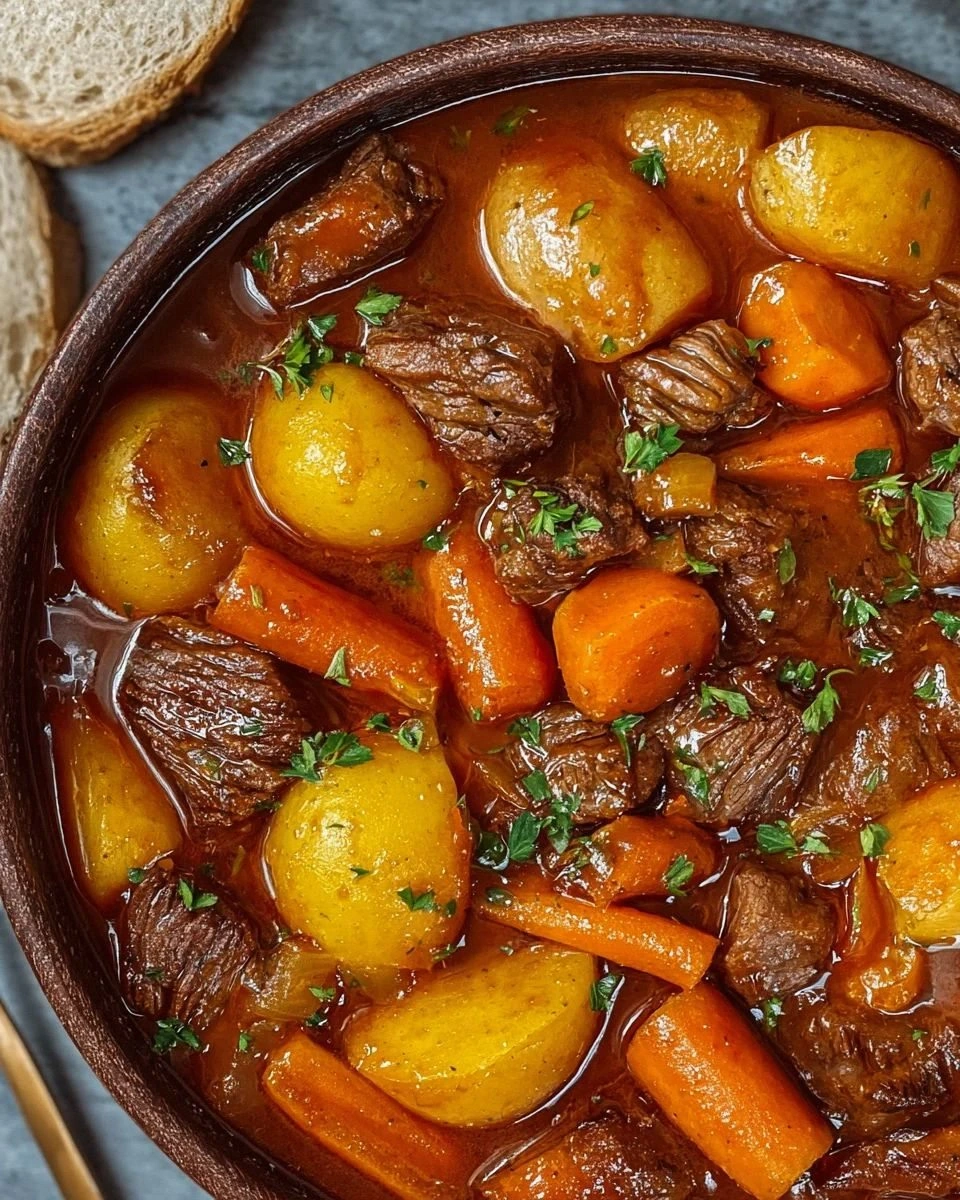
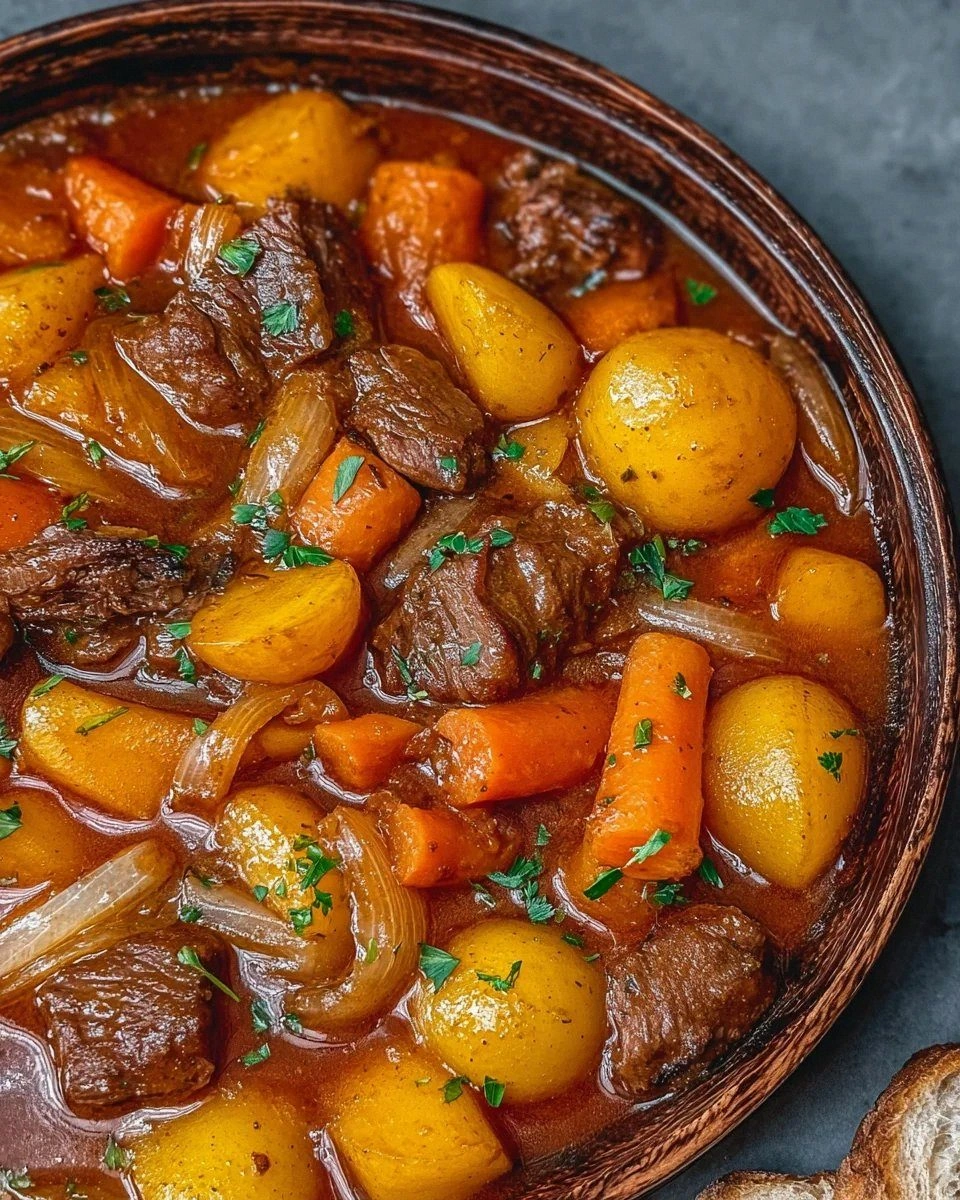
Fast-forward through eight years, a dozen cut-of-beef deep dives, and one memorable incident involving a pressure cooker and my ceiling, and I finally have the formula. This is not your grandmother's stew—unless your grandmother happened to apprentice under a Burgundian butcher and kept a hidden stash of umami bombs in her pantry. We're talking about spoon-coating gravy that tastes like someone reduced a whole steak into a sauce, vegetables that hold their shape but surrender to the slightest nudge, and beef so tender you could cut it with the side of your spoon. I dare you to taste this and not go back for thirds; I certainly never manage to stop at seconds.
Picture yourself pulling this out of the oven, the whole kitchen smelling incredible—like rosemary and black pepper had a baby with roasted bones and red wine. The scent hits the front door before you do, which is why my neighbors have started "dropping by" with suspicious timing. If you've ever struggled with dry meat, watery broth, or that weird metallic aftertaste cheap stew sometimes gets, you're not alone—and I've got the fix. Stay with me here—this is worth it.
Okay, ready for the game-changer? We're going to sear the beef in three separate batches, deglaze with balsamic vinegar instead of wine for once, and finish with a whisper of fish sauce that nobody will detect but everybody will miss if it's gone. Let me walk you through every single step—by the end, you'll wonder how you ever made it any other way.
What Makes This Version Stand Out
- Depth Overload: We build flavor in five distinct layers, starting with a 24-hour dry-brine on the beef and ending with a final splash of sherry that wakes everything up like a brass section in a library.
- Vegetable Integrity: Instead of the usual everything-in-at-once, we stagger additions so the carrots stay carrot-shaped, the potatoes don't dissolve into cloudy flecks, and the onions melt into natural thickening power.
- Gravyless Gravy: Zero flour, zero cornstarch. The sauce thickens itself through collagen and reduced tomato paste, giving you that glossy, slow-motion drip without any pasty aftertaste.
- One-Pot Wonder: Everything happens in the same Dutch oven, meaning fewer dishes and more fond (those caramelized brown bits) swimming in your dinner, not down the drain.
- Weekend or Wednesday: Most of the work is front-loaded; after the initial push you can ignore it for two hours while it turns into dinner and your house smells like a tavern in the best possible way.
- Crowd Convincer: I've served this to picky toddlers, carnivore dads, and vegetarian cousins who "just want a bite of the broth." Every single one asked for the recipe before the night ended.
Alright, let's break down exactly what goes into this masterpiece...
Inside the Ingredient List
The Flavor Base
Chuck roast is the undisputed heavyweight here, but only if you pick the right one. Look for a piece marbled like a good story—plenty of fat running through the muscle, not just a thick cap on top. That intramuscular fat melts into unctuous little pockets that self-baste every fiber of beef. Buy it in one solid slab and cube it yourself; pre-cubed "stew meat" is often a grab bag of trimmings that cook unevenly and taste like regret.
Tomato paste in a tube is worth the extra dollar. It tastes brighter, stays fresher forever, and you won't need to open a whole can for two tablespoons. We caramelize it until it turns from fire-engine red to brick brown, a move that adds a whisper of sweetness and a truckload of glutamates, the natural compounds that make savory food taste more like itself.
Beef stock is the obvious liquid, but here's the twist: use low-sodium and then cheat with a teaspoon of Better Than Bouillon roasted beef base. You get the clean flavor of store-bought convenience plus the feral depth of concentrated meat. If you skip this, the stew will still taste good, just thinner—like hearing your favorite song on phone speakers instead of a proper stereo.
The Texture Crew
Carrots need to be thick-cut on the bias; more surface area means more browning, and the angled edges hold onto gravy like tiny edible spoons. Baby carrots are watery and bland, so resist their siren call of convenience. Peel and cut them ahead, but keep them in cold water so they don't curl up like orange parentheses.
Potatoes should be Yukon Gold, full stop. Russets fall apart and red potatoes stay waxy, but Yukons hit that fluffy middle ground where they absorb flavor yet keep their dignity. Leave the skins on; they're thin, nutritious, and save you from the soul-crushing task of peeling tiny vegetables on a weeknight.
Pearl onions are a pain to peel, I know, but their ratio of surface to interior means they glaze beautifully and pop in your mouth like savory caviar. Pro move: blanch them for 60 seconds, then squeeze at the root end—the skins slither off like they're embarrassed to be there.
The Unexpected Star
Anchovy fillets dissolved in hot fat vanish into thin air, leaving behind only a bass-note of oceanic umami that makes beef taste beefier. If the idea freaks you out, think of it like adding vanilla to chocolate cake; you don't taste vanilla, you just taste more chocolate. Skip them and the stew will taste fine, but with them it tastes like a secret you can't quite explain.
Fish sauce performs the same magic from the fermented angle. A mere teaspoon at the end flips all the other flavors into high definition without announcing itself. I've had dinner guests swear they taste mushroom, soy, and Worcestershire, but none of them identified fish sauce until I confessed—and by then their bowls were empty.
The Final Flourish
Fresh thyme is non-negotiable; dried thyme tastes like dusty library books. Strip the leaves by pinching the top of the stem with one hand and sliding the fingers of the other hand downward—tiny leaves rain off like green confetti. Save the stems for your next batch of chicken stock; they still have plenty of perfume.
Parsley isn't just for color. Flat-leaf (Italian) parsley has a clean, almost lemony snap that slices through the richness like a window opening in a smoky room. Chop it at the last second; the fresher it is, the brighter your final impression will be.
Everything's prepped? Good. Let's get into the real action...
The Method — Step by Step
- Pat the beef cubes bone-dry with paper towels, then season aggressively with kosher salt and cracked pepper. Any moisture on the surface will steam instead of sear, and gray steamed beef is the culinary equivalent of wet socks. Let the cubes sit while you heat a heavy Dutch oven over medium-high heat until a drop of water skitters across the surface like it's late for a meeting.
- Pour in just enough oil to film the bottom—about two teaspoons—and wait until it shimmers like a mirage. Add one layer of beef, leaving space around each piece. Listen for that first sizzle; it should sound like applause. If the pot goes quiet, you've overcrowded, so pull some cubes out and wait. Brown the first side for two full minutes; trying to flip sooner is like pulling on a door marked push.
- Continue searing in small batches, transferring finished beef to a waiting plate. By the third round you'll have a dark fond clinging to the pot—those are flavor crystals, not something to scrub. Between batches, pour off excess fat if it pools deeper than a couple of millimeters; too much grease and your vegetables will fry instead of caramelize later.
- Now the fun part: lower the heat to medium and toss in the chopped onions. They'll deglaze the pan using their own moisture, lifting the browned bits like little scrubbing bubbles. Stir with a wooden spoon, scraping so vigorously that anyone watching might think you're angry at it. When the onions turn translucent and start to brown at the edges, scoot them to the side and add the tomato paste right on the exposed pot bottom.
- Stir the paste into the onions and let it cook, stirring every thirty seconds, until the color deepens from ketchup-red to brick-red to almost mahogany. That color change signals the sugars are caramelizing and the acids are mellowing—ignore anyone who tells you to "just throw it in with the liquid."
- Clear a hot spot again and add the anchovy fillets. They'll dissolve into oily nothingness within thirty seconds, leaving behind a whisper of brine that amplifies everything else. Stir like you're mixing paint, coating every onion strand in the rusty paste.
- Return the beef and any accumulated juices to the pot. Pour in the beef stock, scraping the bottom once more to release any stubborn fond. Add the thyme bundle, bay leaf, and a single strip of orange peel—just the colored part, no bitter white pith. The orange lifts the whole dish the way a squeeze of lemon brightens fish.
- Bring everything to a gentle simmer, then clamp on the lid and slide the pot into a 325°F oven. Set a timer for ninety minutes and walk away. When you come back, the meat should yield to gentle pressure but still hold its shape. If it feels tight like a stress ball, give it another twenty minutes—collagen breaks down on its own schedule, not yours.
- Stir in the carrots and potatoes, re-cover, and send it back for another forty minutes. This is when the vegetables drink up the broth and the broth in turn drinks up their sweetness. Don't trust a recipe that adds everything at the start; you'd end up with beef porridge.
- Pull the pot out, remove the thyme stems and bay leaf, and taste the broth. If it feels thin, simmer on the stovetop for five minutes; if it needs depth, add the fish sauce now. The final sparkle is a handful of frozen peas—they thaw instantly, add color, and bring a pop of sweetness against the rich gravy. Sprinkle with parsley and serve directly from the Dutch oven so everyone gets the primal joy of spooning their own portion.
That's it—you did it. But hold on, I've got a few more tricks that'll take this to another level...
Insider Tricks for Flawless Results
The Temperature Rule Nobody Follows
Most people crank the oven to 350°F because it feels faster, but collagen melts between 160°F and 205°F, and rushing it turns the meat dry on the outside before the inside gives up. A gentle 325°F keeps the liquid just below a boil, coaxing the connective tissue into silky gelatin without ever reaching the turbulent bubble that toughens protein. Think of it as a spa day rather than a power wash.
If you're impatient, you can push to 340°F, but anything hotter and you're basically making beef jerky in broth. A friend tried skipping this step once—let's just say it ended with a group text apology and a late-night pizza run.
Why Your Nose Knows Best
Trust aromas over clocks. When the scent changes from "hot beef" to "roasty caramel," the fond is ready for liquid. If all you smell is sizzling fat, keep going. Conversely, if the air turns acrid and sharp, you've crossed into burn territory—deglaze immediately with a splash of stock and save what you can.
I'll be honest—I've eaten half the batch straight from the pot based on smell alone. My excuse is quality control, but the real reason is that the fragrance triggers something primal that bypasses willpower entirely.
The 5-Minute Rest That Changes Everything
After the stew finishes, turn off the oven, crack the lid slightly, and let it sit for five minutes. This brief pause allows the bubbling to subside so the fat rises to the top, where you can skim most of it off with a wide spoon if you want a cleaner mouthfeel. More importantly, the meat fibers reabsorb some juices, so every cube stays moist instead of weeping onto the plate.
Future pacing: imagine serving bowls that don't leave a puddle of separated broth at the bottom. That's what this micro-rest gives you.
The Overnight Upgrade
Make the stew a day ahead and refrigerate. The flavors meld like old friends at a reunion, and any excess fat solidifies into an easy-to-lift disk. Reheat gently on the stove with a splash of water; you'll swear it tastes twice as beefy. Bonus points: you look like a planning genius when guests arrive and all you do is warm and serve.
Creative Twists and Variations
This recipe is a playground. Here are some of my favorite ways to switch things up:
Bourbon & Bacon Bonanza
Swap the orange peel for a shot of bourbon and add two strips of chopped bacon with the onions. The smoky sweetness plays off the beef like campfire stories and tall tales. Finish with a whisper of smoked paprika and serve with cornbread instead of crusty bread.
Spanish Harlem
Replace half the stock with dry sherry, add a pinch of saffron, and swap the thyme for oregano. Stir in canned chickpeas during the last ten minutes and finish with chopped piquillo peppers. Suddenly you're in a tapas bar, minus the airfare.
Asian Night Market
Use soy sauce instead of salt, swap the balsamic for rice wine vinegar, and add a two-inch knob of fresh ginger sliced into coins. Replace potatoes with daikon radish chunks and finish with Thai basil and a squeeze of lime. The result tastes like pho and stew had a beautiful baby.
Harvest Moon
Add a cup of diced butternut squash and a handful of kale in the last twenty minutes. The squash melts partially, thickening the gravy naturally, while the kale stays vibrant and chewy. A pinch of nutmeg makes the whole pot smell like autumn in New England.
Fire-Eater's Request
Stir in a tablespoon of chipotle peppers in adobo during the tomato-paste step. The smoky heat blooms slowly, so diners get a gentle warmth at first that builds to a satisfying glow by the bottom of the bowl. Serve with cooling sour cream on the side for the cautious.
Surf & Turf Sunday
Add a pound of littleneck clams on top of the stew for the final ten minutes. They pop open and release briny liquor that mingles with the beef gravy, creating a seaside aroma that feels downright luxurious. It's like two vacations in one bowl.
Storing and Bringing It Back to Life
Fridge Storage
Let the stew cool to just warm, then ladle into shallow containers so it chills quickly and safely. It keeps for up to four days, though after day three the vegetables start softening into the background. Store potatoes submerged so they don't oxidize gray, and always reheat only what you'll eat; repeated warming is where texture goes to die.
Freezer Friendly
Freeze in pint-sized freezer bags laid flat; they stack like edible notebooks and thaw in half the time of rigid containers. Squeeze out every last bubble to prevent ice crystals that turn carrots into soggy confetti. Label with painter's tape—trust me, frozen stew and chili look identical at midnight. It keeps three months, though I've never managed to leave it alone that long.
Best Reheating Method
Add a splash of water or low-sodium broth before warming; it loosens the gravy and prevents scorching. Use gentle heat, partially covered, stirring occasionally until the meat is hot all the way through. Microwave works in a pinch, but the stovetop returns it to restaurant quality. A tiny knob of butter at the end re-glosses the sauce and fools everyone into thinking you just made it fresh.