Picture this: it’s a rainy Tuesday evening, you’re scrolling through Instagram for dinner inspiration, and your phone buzzes with a notification from a friend who’s about to drop a culinary bomb. “I just made the most epic katsudon,” she texted, attaching a photo that made my mouth water. I stared at the image, my stomach growling louder than the rain. That moment sparked a dare I couldn’t resist—“I dare you to taste this and not go back for seconds.” The challenge was set.
I pulled my pantry into the light, the scent of soy sauce and garlic sizzling in the memory of a kitchen I’d visited in Osaka. The air was thick with anticipation, a mix of the metallic tang of a fresh pork cutlet and the sweet, umami whisper of dashi. I could almost hear the clink of chopsticks against a ceramic bowl, the gentle hiss of eggs gently folding into the pan. It was a sensory orchestra, and I was the conductor. I knew then that I had to capture every note in this recipe.
Why does this version stand out from the endless list of katsudon recipes you’ll find online? First, it balances the classic flavors with a subtle twist that elevates the dish from ordinary to unforgettable. Second, it uses a technique that locks in moisture without compromising that coveted crispy exterior. Third, it’s designed to be both approachable for beginners and satisfying for seasoned chefs. I’ve tweaked the sauce to give it a silky finish that coats the rice like velvet, while the pork remains tender inside, a contrast that makes every bite a revelation. And the best part? I’m about to reveal the secret ingredient that makes this sauce sing.
I’ll walk you through every single step, from the first chop of onion to the final drizzle of sesame seeds. By the end, you’ll wonder how you ever made it any other way. Let’s dive in, and I promise, this is hands down the best version you’ll ever make at home.
What Makes This Version Stand Out
- Flavor: The sauce is a harmonious blend of dashi, mirin, soy sauce, and a splash of sake that delivers depth without overwhelming the delicate pork.
- Crispiness: The pork cutlet is breaded with a special mix of panko and a pinch of salt, then pan-fried to a golden edge that shatters like thin ice.
- Texture: The eggs are folded just until they set into silky ribbons, creating a contrast with the crunchy pork and fluffy rice.
- Speed: The entire process takes less than an hour, making it a perfect weeknight dinner.
- Versatility: Swap the pork for chicken or tofu, and the dish still shines.
- Presentation: The final dish is a bowl of comfort, garnished with scallions and sesame seeds that add a pop of color and crunch.
- Make‑ahead Potential: The sauce can be prepped in advance, and the cutlet can be fried ahead of time, making this a true “grab‑and‑go” meal.
- Ingredient Quality: Using fresh, high‑quality pork and the finest dashi makes all the difference.
Alright, let’s break down exactly what goes into this masterpiece…
Inside the Ingredient List
The Flavor Base
At the heart of any great katsudon is its sauce—a delicate balance of savory, sweet, and umami notes. Dashi, the Japanese soup stock, provides a subtle depth that cannot be replicated with stock alone. It’s the backbone that carries the other flavors. Mirin adds a gentle sweetness and a hint of acidity, while soy sauce brings saltiness and color. A splash of sake lifts the overall flavor profile, adding a fragrant, slightly nutty aroma. If you can’t find dashi, a good quality chicken or kombu stock will work, but the authentic taste will be slightly different.
The sugar in the sauce is essential—it caramelizes slightly during the simmering phase, giving the sauce a glossy sheen and a pleasant caramel note. Don’t skip it; the sugar is the sweet whisper that balances the savory richness of the pork and the eggs. If you’re watching your carbs, a natural sweetener like honey or maple syrup can be a suitable substitute, but the texture of the sauce may change slightly.
A pinch of salt is added to the sauce to enhance all the flavors, but be careful not to overdo it. The goal is to let each component shine without drowning the others. The final touch is a drizzle of sesame oil right before serving, which adds a nutty aroma and a subtle sheen to the dish. This small addition elevates the dish from good to unforgettable.
The Texture Crew
The pork cutlet is the star of the show, and its texture is everything. Use a thick cut—about 1.5 inches—to ensure it stays juicy inside. Lightly season the pork with salt and pepper before breading. The breading mix of panko and a splash of water creates a light, airy crust that crisps to perfection. The key to a crispy crust is to double‑coat: first dredge in flour, then dip in beaten eggs, and finally roll in panko. This three‑step process traps air and creates a delightful crunch.
Eggs are folded into the sauce just before the pork is added to the pan. The eggs should be beaten lightly—just enough to create strands when poured over the pork. The heat of the pan cooks the eggs quickly, forming silky ribbons that mingle with the pork and rice. The result is a mouth‑watering contrast between the soft, tender pork, the silky eggs, and the fluffy rice.
Rice is the canvas that holds the flavors together. Use short‑grain Japanese rice for authenticity, as it has the right stickiness to hold the sauce and ingredients. Cook the rice to a slightly firmer texture so it doesn’t get soggy when the sauce is added. A good rule of thumb is to let the rice cool for a few minutes before assembling, as this helps it absorb the sauce without dissolving.
The Unexpected Star
Green onions add a fresh, bright contrast that cuts through the richness of the pork and eggs. Slice them thinly to distribute their flavor evenly. They also add a subtle crunch and a pop of color that makes the dish visually appealing. Sesame seeds are the final flourish—sprinkled over the top, they introduce a nutty aroma and a textural contrast that lingers on the palate.
If you’re feeling adventurous, a sprinkle of nori flakes can add a subtle seaweed flavor that complements the dashi. Alternatively, a drizzle of ponzu sauce can introduce a citrusy brightness that lifts the dish. These small additions can transform the dish from comforting to celebratory.
Everything's prepped? Good. Let's get into the real action…
The Method — Step by Step
- Start by heating a large skillet over medium heat and adding 2 tablespoons of vegetable oil. As the oil warms, you’ll notice a faint aroma of toasted grain. Once the oil shimmers, gently place the breaded pork cutlets in the pan. The sizzle is immediate—listen to that satisfying crackle that signals the beginning of a culinary masterpiece. Flip the cutlets after 3 minutes, ensuring the other side achieves a golden, crisp finish.
- While the pork cooks, whisk together the dashi, soy sauce, mirin, sake, sugar, and a pinch of salt in a small saucepan. Bring the mixture to a gentle simmer over low heat, letting the flavors meld for about 5 minutes. The sauce should thicken slightly, taking on a glossy sheen that hints at caramelization. This is the moment of truth—if it’s too thin, the dish will feel watery; if it’s too thick, it will cling to the pork rather than coat it.
- Once the pork is golden, transfer it to a plate and set aside. In the same skillet, pour the simmering sauce over the pork, letting it bubble for 2 minutes. The pork should absorb the sauce, becoming glistening and flavorful. While this happens, whisk the eggs in a bowl until the whites and yolks are just combined—no need for froth.
- Reduce the heat to low and pour the beaten eggs over the pork. Allow the eggs to set into silky ribbons for 2–3 minutes, gently stirring occasionally to ensure even cooking. The eggs should be glossy and slightly translucent, not fully set or runny. This step is crucial; too much heat and the eggs will overcook, becoming rubbery.
- Meanwhile, divide the cooked rice into four heat‑proof bowls. The rice should be warm and slightly sticky, ready to soak up the sauce. The aroma of freshly cooked rice mingles with the savory sauce, creating an irresistible scent that makes your mouth water.
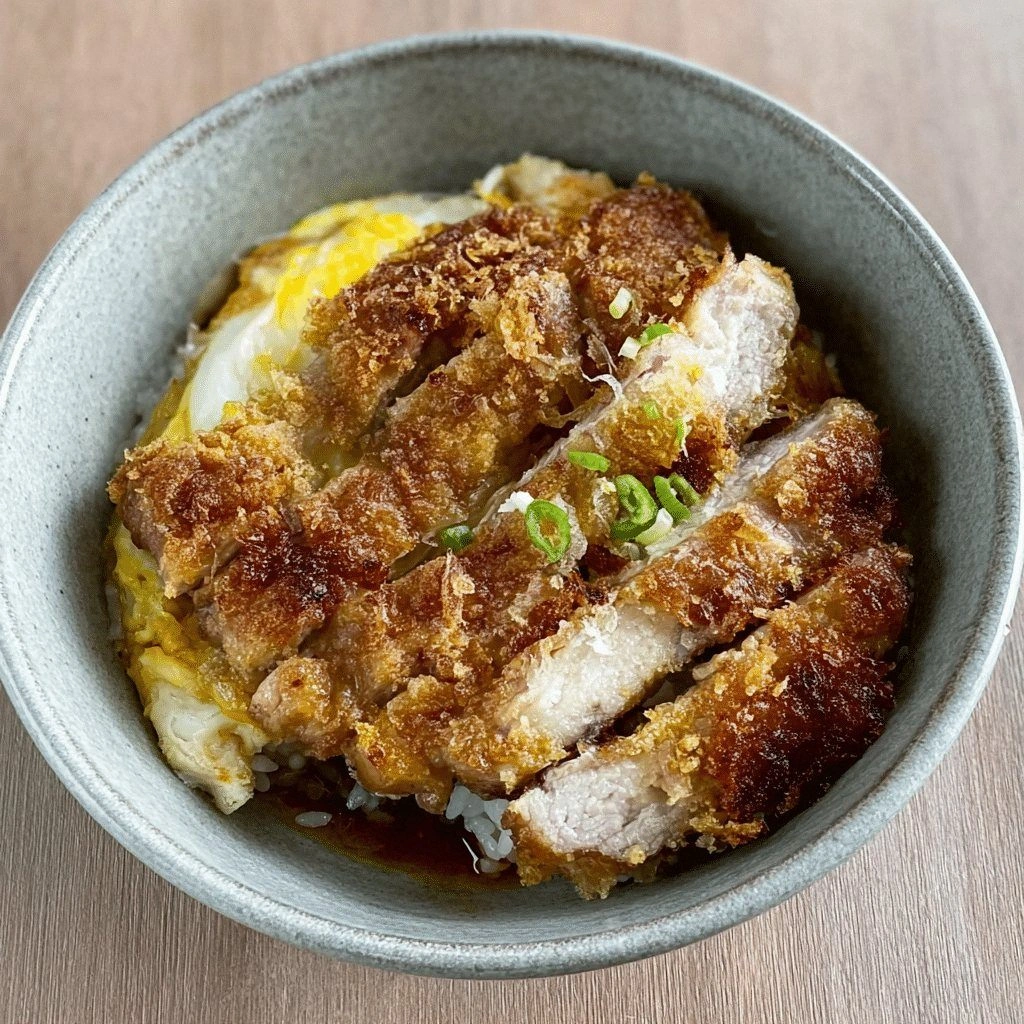
- Place the pork cutlet back onto the rice, then pour the egg‑sauce mixture over the top. The sauce should coat the rice and pork evenly, forming a cohesive, flavorful layer. Garnish with sliced green onions and a sprinkle of sesame seeds for a burst of color and crunch. The final dish should look like a golden, savory sunrise.
- Serve immediately, allowing the steam to rise and the flavors to mingle. The first bite should be a harmonious blend of crispy pork, silky egg, and aromatic rice, with a hint of citrus from the soy and mirin. The sauce’s glossy finish should cling to every morsel, delivering a satisfying bite that lingers on the palate.
- If you’re a perfectionist, you can add a final drizzle of sesame oil for that nutty aroma. The sesame oil should be added just before serving to preserve its delicate fragrance. The dish is now ready to be devoured, and I dare you to taste this and not go back for seconds.
That's it—you did it. But hold on, I've got a few more tricks that'll take this to another level…
Insider Tricks for Flawless Results
The Temperature Rule Nobody Follows
The temperature of your skillet is everything. Too hot, and the pork will burn on the outside before the inside cooks; too cool, and the breading will absorb oil and become soggy. Aim for a medium heat that gives a steady sizzle without flames. Use a thermometer to keep the oil around 350°F (175°C). If you’re unsure, dip a small piece of bread in the oil—if it browns in 60 seconds, you’re good.
Why Your Nose Knows Best
Before you taste the sauce, let it simmer for a few minutes and sniff it. The aroma will tell you if the balance is right. A faint sweetness and a savory umami scent indicate the sauce is on point. If it smells overly sweet or too salty, adjust with a splash of water or a pinch of salt, respectively. My friend once skipped this step and ended up with a sauce that tasted like a broken promise.
The 5-Minute Rest That Changes Everything
After cooking the pork, let it rest on a plate for 5 minutes before slicing. This allows the juices to redistribute, preventing the cutlet from drying out. A quick slice after the rest will reveal a tender center. I’ve seen many people cut right away, only to find the pork was dry and rubbery.
Double‑Dipping for Crunch
For an extra crunchy crust, double‑dip the pork in flour, egg, and panko. The first dip adds a light coating, while the second creates a thicker, crunchier layer. Some chefs swear by this method to achieve a panko crunch that lasts even after the sauce is poured.
The Sesame Oil Finish
Adding a splash of toasted sesame oil right before serving lifts the dish’s aroma and adds a subtle nutty flavor. Toast the sesame oil in a dry pan for a minute until it starts to crackle. This small step transforms the dish from good to unforgettable.
Creative Twists and Variations
This recipe is a playground. Here are some of my favorite ways to switch things up:
Spicy Gochujang Katsudon
Add a tablespoon of gochujang to the sauce for a fiery kick. The fermented Korean chili paste brings depth and heat, turning the dish into an exciting fusion. Serve with a side of pickled kimchi to balance the spice.
Vegetarian Tofu Katsudon
Replace the pork with thick slices of fried tofu. Use a tofu breading mix of panko and soy sauce for extra flavor. The tofu absorbs the sauce beautifully, offering a plant‑based alternative that still delivers the comforting crunch.
Miso‑Infused Katsudon
Stir in a tablespoon of white miso into the sauce for a savory umami boost. The miso adds a subtle earthiness that complements the pork’s richness. This variation is perfect for a cozy winter night.
Seafood Katsudon
Swap the pork for a lightly battered shrimp or scallop. The seafood will cook quickly and pair wonderfully with the silky sauce. The result is a lighter, yet still satisfying, version of the classic bowl.
Herb‑Infused Katsudon
Add chopped fresh parsley or cilantro to the sauce for a burst of green freshness. The herbs bring a bright, almost citrusy note that cuts through the richness of the pork and eggs. This version is especially refreshing on a hot day.
Citrus Twist Katsudon
Finish the dish with a squeeze of fresh lemon or yuzu juice. The citrus acidity brightens the sauce and adds a zesty finish. It’s a simple tweak that can transform the dish into a vibrant, palate‑cleaning experience.
Storing and Bringing It Back to Life
Fridge Storage
Store the assembled katsudon in an airtight container for up to 2 days. Keep the rice and pork separate if possible, as the rice can become soggy when combined with the sauce. When ready to eat, reheat the pork in a skillet and the rice in a microwave, then combine with the sauce. The dish should be warm and comforting, just like when it was first made.
Freezer Friendly
The sauce can be frozen in a sealed bag for up to 3 months. The pork cutlets freeze well when wrapped in parchment paper and stored in a freezer bag. When reheating, thaw the pork in the refrigerator overnight and reheat in a skillet. The sauce will reheat nicely on the stovetop with a splash of water to restore its thickness.
Best Reheating Method
To preserve the texture of the pork, reheat it in a non‑stick skillet over medium heat. Add a small splash of water or broth to keep it moist. The rice should be heated separately in a microwave or steamer until steaming hot. When reassembling, pour the warmed sauce over the rice and pork, and garnish with fresh green onions.