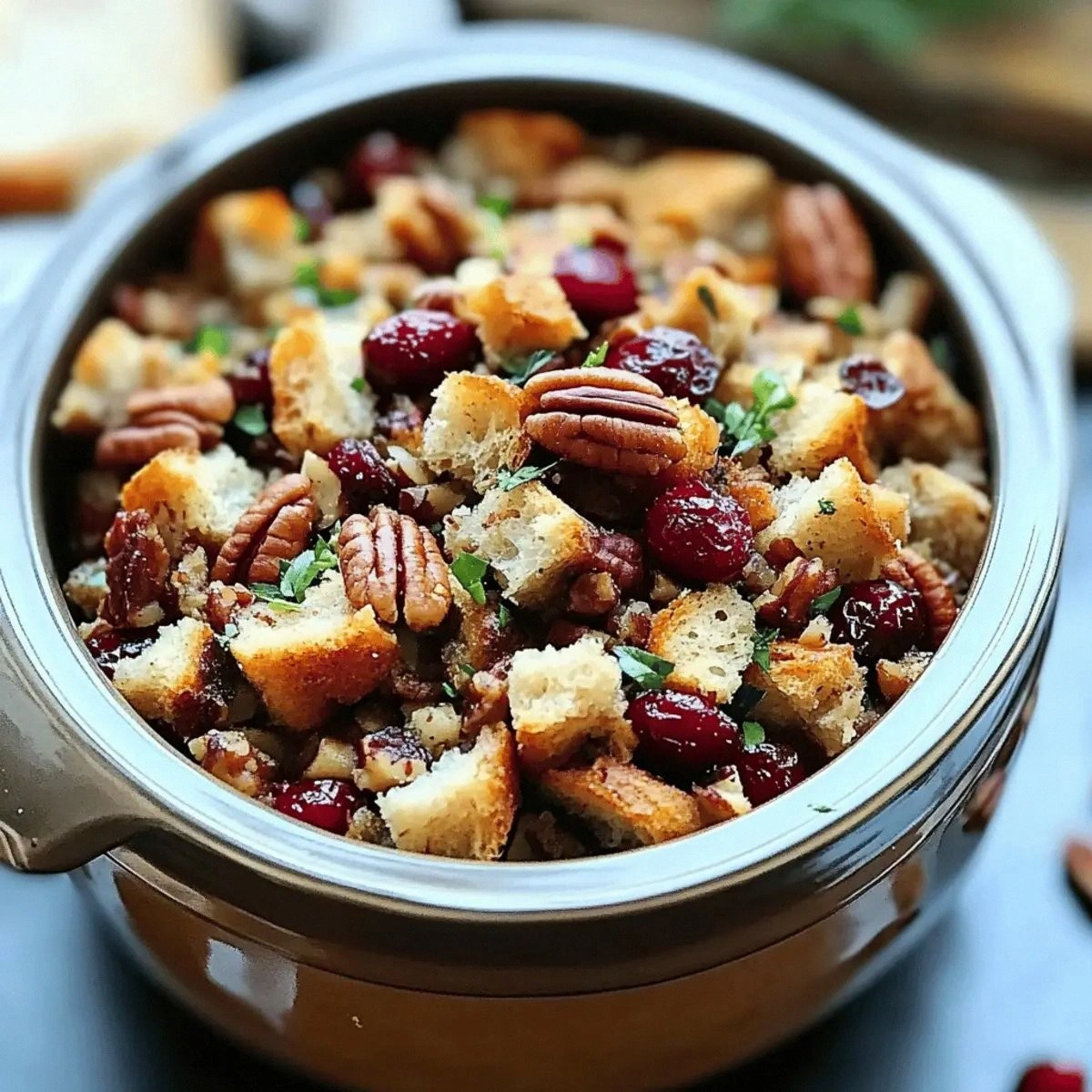
I still remember the Thanksgiving when my oven died. Not just a little hiccup — full-on, dramatic, smoke-billowing death rattle right as I was about to slide in the turkey. The stuffing was prepped, the guests were arriving, and there I stood, holding a baking dish like a tragic Shakespearean prop. But here's the thing: that disaster led me to the most incredible stuffing revelation of my life. While everyone else was panic-searching for takeout, I dumped everything into my slow cooker, crossed my fingers, and discovered what might be the most foolproof, flavorful, absolutely irresistible stuffing you'll ever taste.
Picture this: tender cubes of bread soaked in herb-infused broth, studded with jewel-like cranberries that burst with sweet-tart flavor, and crunchy pecans that add the most satisfying texture contrast. The slow cooker works its magic by creating this incredibly moist environment where every cube gets perfectly saturated while maintaining just enough structure to avoid that dreaded mush factor. The edges develop these gorgeous crispy bits that everyone fights over, while the center stays luxuriously tender. It's like having your cake and eating it too, except it's stuffing and you'll want to eat the entire batch.
What makes this version absolutely game-changing is how it frees up your oven for everything else while delivering restaurant-quality results. No more playing Tetris with roasting pans, no more dried-out stuffing because you had to keep it warm too long, no more timing anxiety. Just set it and forget it while your house fills with the most incredible aroma that'll have neighbors wondering what restaurant opened on your block. I've served this to self-proclaimed stuffing haters who went back for thirds. My cousin texted me at midnight asking if there was any left. My neighbor tried to trade me her famous pumpkin pie for the recipe. This stuffing has powers, I'm telling you.
Let me walk you through every single step — by the end, you'll wonder how you ever made it any other way.
What Makes This Version Stand Out
Hands-Off Perfection: While traditional stuffing demands constant babysitting — basting, covering, uncovering, rotating — this version asks for maybe five minutes of active time. The slow cooker maintains perfect moisture levels automatically, so you can focus on your main dish or, better yet, enjoy a glass of wine with your guests.
Texture Paradise: Most stuffings suffer from a sad choice: dry and crumbly or wet and mushy. This method creates both textures in one magical dish. The bottom stays luxuriously moist while the top develops those coveted crispy edges that shatter like autumn leaves under your fork. Every bite offers contrast and complexity.
Flavor Infusion: The low, slow cooking allows every herb, every spice, every aromatic to fully bloom and penetrate the bread. Those dried cranberries rehydrate into plump, juicy gems that burst with flavor. The pecans toast gently, releasing their oils and becoming intensely nutty. It's like the difference between a quick handshake and a long, warm hug.
Holiday Sanity Saver: Oven space is prime real estate during holiday cooking. This stuffing claims zero of it. While your turkey roasts, your potatoes bake, your rolls brown, your stuffing happily bubbles away in its own little world, staying perfectly hot until the moment you serve.
Make-Ahead Champion: You can prep everything the night before — chop your vegetables, cube your bread, toast your pecans. In the morning, just layer everything in the slow cooker and walk away. I've even made this two days ahead, refrigerated it, and reheated it to perfection. Try that with oven stuffing and you'll end up with something resembling savory cardboard.
Endlessly Adaptable: Vegetarian guests? Use vegetable broth and skip the egg. Nut allergies? Swap in pumpkin seeds or leave them out entirely. Like it sweeter? Add more cranberries. Prefer savory? Throw in some mushrooms. This recipe is your canvas, and you're the artist who gets to eat your masterpiece.
The Crowd Reaction: I dare you to taste this and not go back for seconds. I've watched people who typically ignore stuffing entirely circle back to the buffet table like sharks, piling their plates higher each time. The combination of sweet, savory, crunchy, and tender hits every pleasure center in your brain simultaneously.
Inside the Ingredient List
The Flavor Foundation
The bread is everything here — it's not just filler, it's the star vehicle carrying all those incredible flavors. Day-old bread works best because it's lost some moisture, creating tiny air pockets that'll soak up our herbed broth like a flavor sponge. I'm partial to a mix of sourdough and country white for complexity, but honestly, use what you have. That half-eaten baguette from last night's dinner? Perfect. The ends of three different loaves sitting in your freezer? Even better. Just avoid pre-sliced sandwich bread — it's too soft and will dissolve into sad mush.
The broth is your secret weapon for depth. Homemade turkey or chicken broth will make you weep with joy, but a good quality store-bought version works beautifully too. Warm it slightly before adding — cold broth shocks the bread and prevents proper absorption. I learned this the hard way when my first attempt had dry pockets that tasted like seasoned croutons. Not the vibe we're going for.
The Texture Crew
Butter might seem basic, but it's carrying the whole aromatics team on its golden shoulders. We're not just melting it; we're browning it slightly to develop those nutty, caramel notes that make restaurant food taste like restaurant food. The onion and celery sauté in this liquid gold, releasing their natural sugars and creating the savory backbone that'll have people asking what your secret ingredient is. Spoiler: it's just properly cooked vegetables, but don't tell them that.
The egg is your binding agent, but it's doing double duty adding richness and helping create that custardy texture in the center. Beat it well before adding — nobody wants scrambled egg bits in their stuffing. I once had a friend skip the egg because she was out, and while it was still tasty, it lacked that luxurious cohesion that makes this version special.
The Unexpected Stars
Dried cranberries are the pop of sunshine in this autumnal dish. They start shriveled and sad-looking, but as they slowly rehydrate in the broth, they plump into these juicy jewels that burst with sweet-tart flavor. Don't substitute fresh cranberries here — they're too tart and will throw off the balance. Golden raisins work in a pinch, but cranberries give you that holiday feeling that makes this taste like celebration on a fork.
Pecans bring the crunch and the richness. Toast them first — I cannot stress this enough. Raw pecans taste like you're eating tree bark. Toasted pecans taste like you're eating little pieces of autumn itself. They'll continue toasting in the slow cooker, so just a quick 5-minute toast in a dry pan until they smell fragrant is perfect. Over-toast them and they'll taste bitter, which is a heartbreaking way to ruin a beautiful dish.
The Final Flourish
Fresh herbs make all the difference between good stuffing and stuffing that makes people close their eyes and sigh. Dried herbs work in a pinch, but they're like listening to music through a phone speaker versus a concert hall. Sage is traditional for a reason — its earthy, slightly peppery flavor is stuffing's soulmate. Thyme adds those tiny floral notes that make everything taste more complex. If you have rosemary, throw in a teaspoon minced, but go easy — it's potent stuff that can take over like that one relative who tells the same story every year.
Everything's prepped? Good. Let's get into the real action...
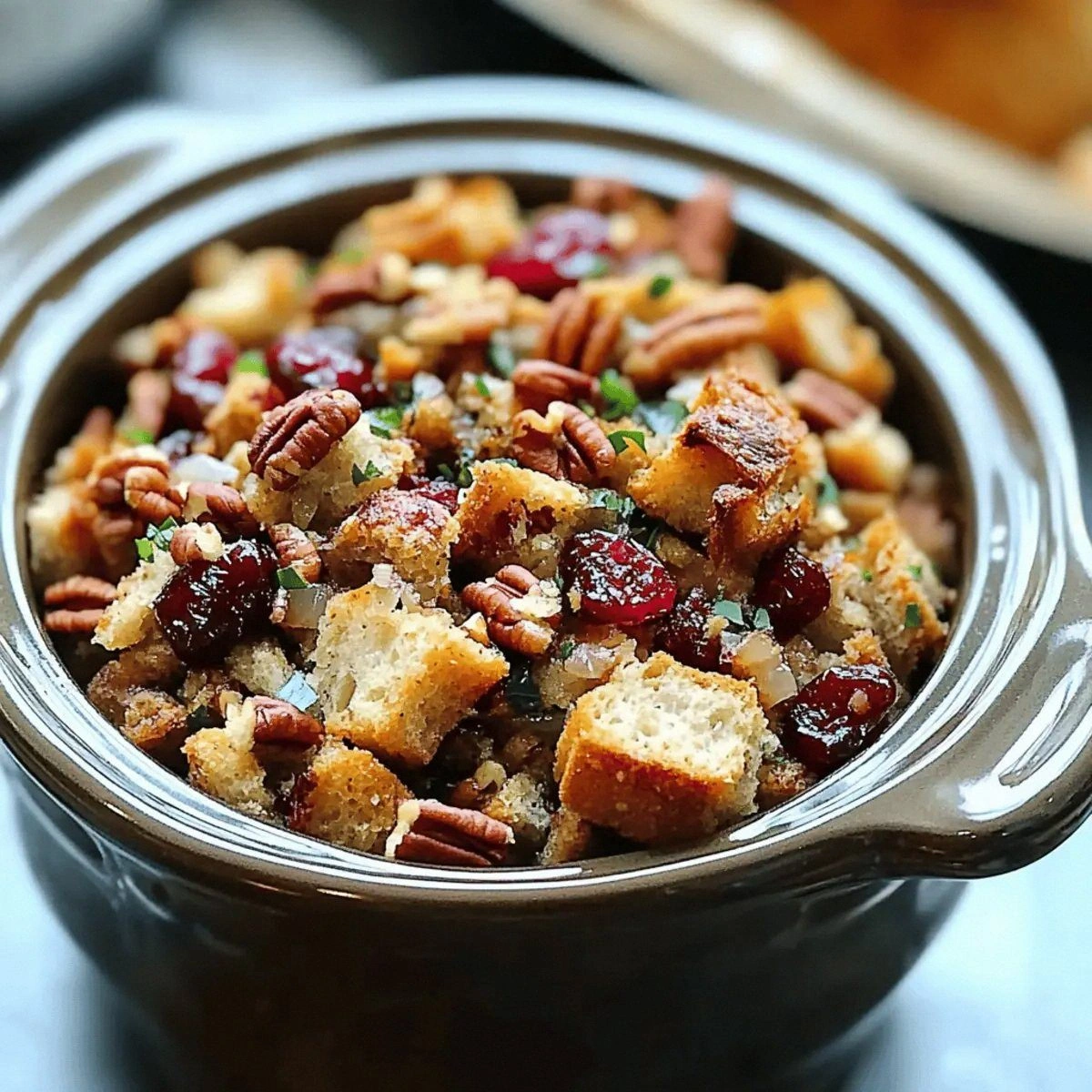
The Method — Step by Step
- Start by cutting your bread into 1-inch cubes — think rustic, not perfect. We're going for that artisanal, torn-by-hand look that says "I made this with love" not "I measured with a ruler." Spread them on a baking sheet and let them air-dry for at least an hour, or overnight if you're a planner. This step is crucial — fresh bread will collapse into paste, but slightly stale bread maintains its integrity while soaking up all the flavorful broth. You'll know they're ready when they feel dry on the outside but still have a little give when you squeeze them.
- Heat your butter in a large skillet over medium heat until it starts to foam and turn golden. This is where the magic begins — that nutty aroma means you've hit the sweet spot between melted and browned. Toss in your diced onion and celery with a generous pinch of salt. The salt helps draw out moisture and concentrates flavors. Cook them slowly, stirring occasionally, until they're softened and translucent but not browned — about 8-10 minutes. Your kitchen should smell like you're living inside the world's most comforting soup commercial.
- While your aromatics do their thing, warm your broth in a separate pot. It should be steaming but not boiling — think hot chocolate temperature. Cold broth is the enemy of even cooking, and hot broth will start cooking your egg prematurely. Whisk in your herbs and let them steep for 5 minutes. This simple step extracts maximum flavor and ensures every cube of bread gets perfectly seasoned. Taste it now — it should be slightly over-seasoned since it'll be diluted by all that bread.
- In a large bowl, beat your egg until it's completely homogeneous and slightly frothy. Slowly drizzle in a cup of the warm broth while whisking constantly — we're tempering the egg so it doesn't scramble when it hits the hot liquid. Once incorporated, whisk in the remaining broth. This creates a rich, custardy base that'll bind everything together while keeping it moist and tender. Skim off any foam — it can create weird rubbery bits during cooking.
- In the biggest bowl you own, combine your dried bread cubes, sautéed vegetables, cranberries, and pecans. Toss them gently — think of it as giving them a group hug, not wrestling them into submission. You want everything evenly distributed without crushing the bread. If you've ever made stuffing that had all the cranberries sunk to the bottom, it's because you were too gentle here. Be assertive but loving, like you're tucking in a child.
- Pour your herbed broth mixture over the bread mixture in stages, tossing gently between additions. You're looking for everything to be moistened but not swimming — think of a well-watered plant, not soup. Press down gently with your hands (clean hands work better than any tool here) to help the bread absorb the liquid. Let it sit for 5 minutes — this allows the bread to drink up the broth evenly. If there are dry spots after this rest, drizzle with a bit more broth.
- Transfer everything to your slow cooker, pressing down gently to create an even layer. Don't pack it down like you're making cement — you want some air pockets so steam can circulate. The top should look slightly bumpy and rustic, not smooth and perfect. Cover and cook on low for 4-5 hours or high for 2-3 hours. Resist the urge to peek for the first two hours — every time you lift the lid, you're adding 15-20 minutes to your cooking time.
- The moment of truth comes when you see the edges pulling away slightly from the sides and the top looks golden and inviting. Stick a knife in the center — it should come out clean, not wet. The stuffing should feel set but springy, like a well-made mattress. If it seems too wet, remove the lid for the last 30 minutes to let excess moisture evaporate. If it seems dry (unlikely but possible), drizzle with a bit more warm broth.
- Let it rest for 10 minutes before serving — this sets the texture and prevents third-degree burns from molten cranberry bombs. Garnish with fresh herbs if you're feeling fancy, or just dig in with a big spoon if you're feeling hungry. I won't judge either way, and honestly, once people taste it, nobody's looking at garnishes anyway.
That's it — you did it. But hold on, I've got a few more tricks that'll take this to another level...
Insider Tricks for Flawless Results
The Temperature Rule Nobody Follows
Here's the thing that separates good stuffing from legendary stuffing: temperature management. Your bread, vegetables, and broth should all be roughly the same temperature when you combine them. Cold bread meeting hot broth creates steam pockets that leave you with dry spots and wet spots — like stuffing roulette. Room temperature ingredients blend seamlessly, absorbing flavors evenly and cooking uniformly. I leave everything out for 30 minutes before starting, which also happens to be the perfect amount of time for a pre-cooking glass of wine. Coincidence? I think not.
Why Your Nose Knows Best
Don't rely solely on timers — your nose is the most sophisticated cooking tool you own. When the stuffing is perfectly done, your house will smell like the best Thanksgiving dinner you've ever attended. It's this incredible blend of toasty bread, fragrant herbs, and caramelized vegetables that makes stomachs growl and mouths water. If you smell it from the living room, it's probably ready. If your neighbors start asking what you're making, you've definitely hit the sweet spot. Trust the aroma — it's never wrong.
The 5-Minute Rest That Changes Everything
I know, I know — when there are hungry people hovering and the turkey's getting cold, waiting feels impossible. But those five minutes of rest are the difference between stuffing that holds together and stuffing that collapses into a sad pile when you serve it. During the rest, the starches finish setting, the custardy parts firm up, and the flavors redistribute themselves evenly. It's like letting a steak rest, but for stuffing. Plus, it gives you time to find your serving spoon, finish the gravy, or sneak a taste without anyone noticing.
The Crispy Edge Secret
Everyone knows the best part of any baked dish is the edges, but stuffing typically only gives you a few precious inches of crispy goodness. Here's how to maximize that texture paradise: butter the sides of your slow cooker before adding the stuffing. As it cooks, the butter helps create these incredible golden-brown edges that taste like stuffing croutons. For even more crunch, remove the lid for the last 15-20 minutes of cooking. The top develops these crackly bits that shatter under your fork while staying tender underneath.
The Make-Ahead Miracle
This stuffing is actually better when made ahead — the flavors have time to meld and deepen. Cook it completely, let it cool, then refrigerate for up to three days. To reheat, add a splash of broth, cover, and warm on low in your slow cooker for 1-2 hours. It's like the stuffing equivalent of how soup tastes better the next day. I've even frozen portions in muffin tins for individual servings that reheat perfectly for quick weeknight dinners. Yes, I turn holiday leftovers into regular Tuesday night food. No regrets.
Creative Twists and Variations
This recipe is a playground. Here are some of my favorite ways to switch things up:
The Sweet and Savory Swap
Replace half the cranberries with dried cherries and add 2 tablespoons of orange zest plus a splash of orange juice. The cherries bring this incredible depth and wine-like flavor that pairs beautifully with the citrus brightness. Add some fresh thyme and you've got stuffing that tastes like it came from a fancy bistro. My sister-in-law requests this version every year and claims it's the only thing that makes dealing with her in-laws bearable.
The Nutty Professor
Walnuts, hazelnuts, or even pistachios work beautifully here. Each brings its own personality — walnuts are earthy and robust, hazelnuts add a European elegance, pistachios bring color and a slightly sweet note. Toast them all the same way, but adjust the quantity based on intensity. Pistachios can take over if you use too many, while walnuts can handle being the star. Mix and match for a nut medley that'll have people asking if you hired a private chef.
The Veggie Power Move
Add diced apples and fennel for a stuffing that tastes like autumn in New England. The apples keep their shape while getting tender and sweet, while fennel adds this incredible anise note that makes everything taste more sophisticated. Use a tart apple like Granny Smith to balance the sweetness. This version pairs beautifully with pork and has converted several self-proclaimed stuffing skeptics in my family. My cousin now makes this for every potluck and claims it's her "secret family recipe" — I let her have this one.
The Spice Route
Add a teaspoon of Chinese five-spice powder and some chopped crystallized ginger for an Asian-inspired twist that sounds weird but tastes incredible. The warm spices complement the cranberries perfectly, and the ginger adds these little pops of bright heat. This version is especially good if you're serving duck or goose instead of turkey. I brought this to an international potluck and watched people who'd never had stuffing before lose their minds over it.
The Mushroom Lover's Dream
Sauté a mix of wild mushrooms — shiitake, oyster, cremini — until they're deeply browned and concentrated. The umami bomb they create transforms the stuffing into something incredibly savory and meaty-tasting, even without any meat. Use the soaking liquid from dried porcini as part of your broth for an extra layer of earthy flavor. This vegetarian version is so satisfying that meat lovers won't miss a thing. My mushroom-hating husband asks for this version specifically, which still blows my mind.
The Breakfast Stuffing Remix
Add cooked breakfast sausage, swap the herbs for sage and black pepper, and include some cheddar cheese cubes. This version works brilliantly for brunch the day after Thanksgiving — just reheat it and top with a fried egg. The cheese melts into these incredible pockets of richness, while the sausage adds smoky, savory depth. It's like the best parts of Thanksgiving and breakfast had a delicious baby. We serve this with mimosas and call it "Thanksgiving: The Sequel."
Storing and Bringing It Back to Life
Fridge Storage
Let the stuffing cool completely before storing — hot stuffing in a sealed container creates condensation that leads to soggy, sad leftovers. Pack it in shallow containers so it cools quickly and evenly. It'll keep for up to four days in the refrigerator, though honestly, it's never lasted more than two days in my house. Press plastic wrap directly against the surface to prevent it from drying out and absorbing other fridge flavors. Nobody wants stuffing that tastes like last week's Chinese takeout.
Freezer Friendly
This stuffing freezes beautifully for up to three months. I portion it into freezer bags, press out all the air, and flatten them for easy stacking. Thaw overnight in the refrigerator, then reheat with a splash of broth to restore moisture. Pro tip: freeze individual portions in muffin tins, then pop them out and store in a bag. These single servings reheat perfectly for quick lunches or emergency comfort food. I've been known to eat one straight from the microwave at 2 AM during stressful deadline weeks.
Best Reheating Method
The slow cooker is your friend here too — add the stuffing with a few tablespoons of broth, cover, and heat on low for 1-2 hours until warmed through. For smaller portions, microwave with a damp paper towel over the top to create steam. The oven works too — cover with foil and heat at 325°F for about 20 minutes. But honestly, I've eaten this cold straight from the fridge and it's still delicious. Don't tell the food safety people I said that.