Picture this: it’s a rainy Tuesday night, the kind where the sky looks like someone spilled a bucket of charcoal over the city, and you’re stuck scrolling through endless recipe blogs that all promise “quick, easy, healthy” meals but end up tasting like bland cardboard. I was on the verge of ordering pizza when I remembered a half‑finished jar of soy sauce in the fridge and a couple of salmon fillets that had been languishing in the freezer for far too long. I thought, “What if I could turn this culinary junk drawer into a dinner that makes my taste buds do a happy dance?” That thought sparked a kitchen experiment that turned a simple pantry raid into a full‑blown flavor fireworks show.
The moment the salmon hit the hot pan, a sizzle erupted that sounded like a tiny applause from the universe. The aroma of garlic and ginger rose like an invitation, mingling with the sweet perfume of honey and the salty kiss of soy sauce. My kitchen filled with a scent so intoxicating it made the rain outside feel like a distant memory. I could see the glaze thickening, clinging to the fish like a glossy, caramel‑kissed coat, while the vegetables nearby turned a vibrant emerald and orange, promising crunch and freshness in every bite.
Most teriyaki salmon recipes either drown the fish in a sugary sauce that turns it soggy, or they skim the surface, leaving the salmon bland and overcooked. This version, however, is a masterclass in balance: the sauce caramelizes just enough to give the fillets that coveted glossy sheen, the fish stays buttery‑soft inside, and the veggies stay crisp enough to add texture without stealing the spotlight. The secret? A precise timing trick and a splash of sesame oil that adds a nutty depth you won’t find in any boxed sauce. I dare you to taste this and not go back for seconds.
Let me walk you through every single step — by the end, you’ll wonder how you ever made it any other way. Okay, ready for the game‑changer? This next part? Pure magic.
What Makes This Version Stand Out
- Flavor Explosion: The combination of soy sauce, honey, and ginger creates a sweet‑savory harmony that coats the salmon like velvet, while the sesame oil adds an unmistakable Asian nuance.
- Texture Triumph: A quick sear gives the fish a caramelized crust that cracks delightfully, yet the interior stays melt‑in‑your‑mouth tender, thanks to the precise cooking window.
- Simplicity Meets Sophistication: With just a handful of pantry staples you can achieve a restaurant‑quality dish without a PhD in culinary arts.
- Ingredient Integrity: Using high‑quality salmon fillets ensures you get those omega‑3 fatty acids that make the dish not only tasty but also heart‑healthy.
- Crowd‑Pleaser Factor: Even the pickiest eaters love the bright colors, the creamy avocado, and the subtle crunch of sesame seeds — it’s a visual and gustatory win.
- Make‑Ahead Friendly: The sauce can be pre‑made and stored, and the assembled bowls reheat beautifully, making it perfect for meal‑prep warriors.
- Versatile Base: Swap white rice for cauliflower rice, quinoa, or even noodles; the dish adapts to any dietary preference without losing its soul.
- Eco‑Conscious Choice: By using sustainable salmon and minimizing waste with leftover veggies, you’re feeding yourself and the planet.
Inside the Ingredient List
The Flavor Base
Soy sauce: This is the backbone of the teriyaki glaze, delivering a deep umami punch that anchors the sweet notes. Low‑sodium versions let you control the salt level without sacrificing flavor. If you skip it, the sauce loses its savory depth and feels one‑dimensional.
Honey: The honey brings a natural sweetness that balances the salty soy sauce, creating that signature glossy sheen. It also helps the glaze caramelize without burning. Maple syrup works as a swap, but it will introduce a woody undertone.
Rice vinegar: A splash of acidity brightens the sauce, cutting through the richness of the salmon. Apple cider vinegar can stand in a pinch, though it adds a slightly fruitier note.
The Texture Crew
Sesame oil: Just a teaspoon drizzled in at the end adds a nutty aroma that elevates the dish from ordinary to extraordinary. Using too much can overwhelm, so keep it subtle.
Garlic and fresh ginger: Freshly minced garlic and grated ginger are the aromatic powerhouses that give the sauce its zing. Skipping them results in a flat glaze that lacks that punchy, aromatic lift.
Cornstarch: Mixed with a little water, this little powder transforms the liquid glaze into a silky coating that clings to the salmon. Forgetting it means a runny sauce that slides off the fish like a wet towel.
The Unexpected Star
Avocado: Sliced avocado adds a buttery creaminess that balances the salty‑sweet glaze, while also delivering healthy fats. If you’re not a fan, substitute with a dollop of Greek yogurt for a tangy contrast.
Green onions and sesame seeds: These finishing touches provide a fresh pop and a delicate crunch, completing the flavor symphony. Omit them and the bowl feels incomplete, like a song missing its final chord.
The Final Flourish
Cooked rice: A fluffy bed of rice (or any grain you prefer) soaks up the extra sauce, ensuring every bite is moist and flavorful. Using cold leftover rice can lead to a soggy bowl; always reheat rice briefly before serving.
Vegetables: Steamed broccoli and shredded carrots provide color, crunch, and a nutritional boost. Feel free to swap in snap peas, bell peppers, or bok choy for variety. Skipping the veg not only reduces the visual appeal but also loses the textural contrast that makes the bowl exciting.
Everything's prepped? Good. Let’s get into the real action…
The Method — Step by Step
Start by whisking together soy sauce, honey, rice vinegar, sesame oil, minced garlic, grated ginger, and the cornstarch slurry (1 tsp cornstarch mixed with 2 tsp water) in a medium bowl. This is your teriyaki sauce, and it should look slightly glossy already. Let it rest for five minutes; this allows the cornstarch to fully hydrate, ensuring a smooth glaze later. Pro tip: Taste the sauce now and add a pinch of pepper if you like a subtle heat.
While the sauce rests, pat the salmon fillets dry with paper towels. Lightly dust each side with a thin layer of cornstarch — this is the secret that gives you that coveted crust. Heat a non‑stick skillet over medium‑high heat and add a splash of high‑smoke‑point oil (like grapeseed). When the oil shimmers, lay the salmon skin‑side down (if it has skin) and listen for that satisfying sizzle.
Cook the salmon for about 3‑4 minutes without moving it. You’ll notice the edges beginning to turn opaque and the flesh starting to lift from the pan. Watch Out: If the pan is too hot, the cornstarch will burn, leaving a bitter taste. Adjust the heat to medium if you see the edges browning too quickly.
Flip the salmon gently and let it cook another 2‑3 minutes, just until the flesh is opaque but still slightly pink in the center. Remove the fillets and set them aside on a plate. The pan will still have delicious browned bits — those are flavor gold.
Reduce the heat to low and pour the prepared teriyaki sauce into the same skillet. Stir constantly; the sauce will thicken within a minute, becoming a glossy, clingy glaze. If it gets too thick, splash in a tablespoon of water to loosen it just enough to coat the salmon beautifully.
Return the salmon to the pan, spooning the glaze over each piece. Let it simmer for another minute so the fish absorbs the sauce. The glaze should be thick enough to cling, but still glossy enough to look like a lacquered masterpiece.
While the salmon finishes, steam your broccoli and carrots until just tender — you want that bright snap, not mush. Meanwhile, reheat your cooked rice (or grain of choice) in a microwave or skillet with a splash of water to fluff it up.
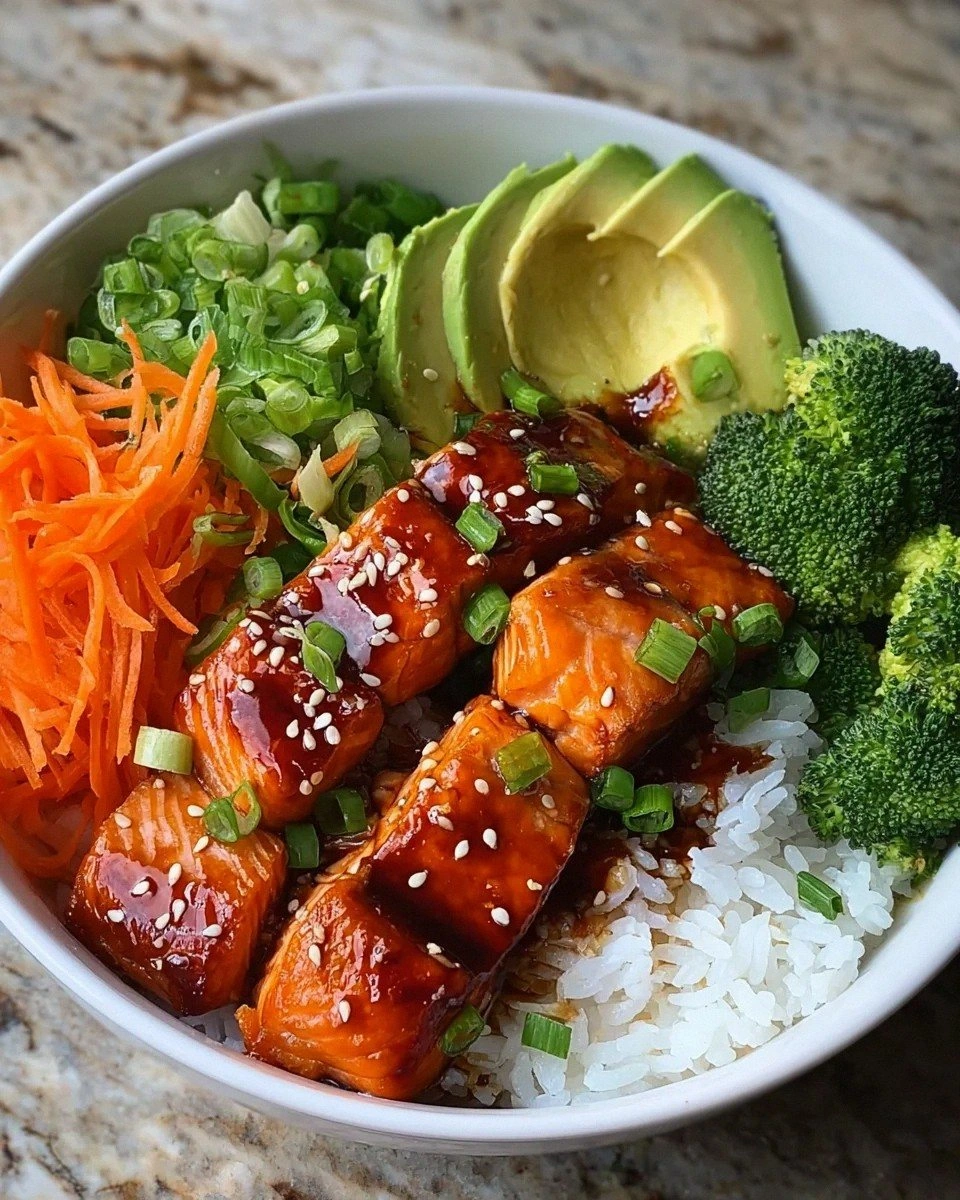
To assemble, place a generous mound of rice at the bottom of each bowl, arrange the steamed veggies on one side, and lay the glazed salmon on top. Drizzle any remaining sauce over the whole bowl, then garnish with sliced avocado, green onions, and a sprinkling of sesame seeds. The final look should be a colorful, balanced tableau that makes you want to photograph it before digging in.
Serve immediately, and watch as your guests (or your future self) marvel at the glossy, caramelized salmon and the burst of fresh textures. That moment when the first bite hits? Pure bliss. And now the fun part: you’ve just mastered a dish that will become a staple in your culinary rotation.
Insider Tricks for Flawless Results
The Temperature Rule Nobody Follows
Most home cooks crank the heat to “high” hoping for a quick sear, but that’s a recipe for burnt cornstarch and uneven cooking. Keep your pan at medium‑high and let it preheat for at least 2 minutes before the fish hits the surface. The right temperature gives you a crust that’s caramelized without bitterness, and it ensures the interior stays moist.
Why Your Nose Knows Best
The moment the sauce starts to bubble and release that sweet‑savory perfume is your cue to reduce the heat. If you keep the flame high, the sugars will caramelize too fast and turn bitter. Trust your nose: when you smell a faint toasted almond note, you’re in the sweet spot.
The 5‑Minute Rest That Changes Everything
After the salmon finishes cooking, let it rest on a warm plate for five minutes before slicing. This short pause allows the juices to redistribute, preventing a dry bite. I’ve seen friends cut straight away and end up with a watery plate — a simple mistake that ruins the texture.
Rice Revitalizer Trick
If you’re using leftover rice, sprinkle a teaspoon of water over it and cover with a damp paper towel before microwaving. The steam re‑fluffs the grains, giving you that fresh‑cooked feel instead of a dry, compact mound.
Sesame Seed Toasting Shortcut
Instead of buying pre‑toasted sesame seeds, toss raw seeds in a dry skillet over medium heat for 2‑3 minutes, shaking the pan frequently. You’ll hear a gentle pop, and the seeds will turn golden, releasing an aroma that instantly upgrades the bowl.
Creative Twists and Variations
This recipe is a playground. Here are some of my favorite ways to switch things up:
Spicy Sriracha Kick
Stir a tablespoon of sriracha into the teriyaki sauce for a subtle heat that complements the honey’s sweetness. Garnish with thinly sliced jalapeños for those who love a fiery bite.
Coconut‑Lime Fusion
Replace half of the soy sauce with coconut aminos and add a splash of lime juice to the glaze. Top the bowl with toasted coconut flakes for a tropical twist that pairs beautifully with the salmon’s richness.
Crunchy Nutty Delight
Swap the avocado for a handful of roasted peanuts or cashews. The nuts add a satisfying crunch and a buttery flavor that contrasts nicely with the silky glaze.
Vegetarian “Salmon” Substitute
Use firm tofu or tempeh marinated in the same teriyaki sauce. Press the tofu to remove excess moisture, then follow the same searing steps for a plant‑based version that still delivers that caramelized exterior.
Grain‑Free Bowl
Replace rice with cauliflower rice or shirataki noodles for a low‑carb alternative. The lighter base lets the sauce and salmon shine even more, and it keeps the calorie count in check.
Herb‑Infused Finish
Finish the bowl with a drizzle of herb‑infused oil (like cilantro or basil) for a fresh, aromatic layer that brightens the entire dish.
Storing and Bringing It Back to Life
Fridge Storage
Allow the cooked components to cool to room temperature, then store the salmon, sauce, rice, and vegetables in separate airtight containers. This prevents the rice from getting soggy. The salmon and sauce can be kept together; they’ll meld even more flavorwise. Refrigerate for up to three days.
Freezer Friendly
Portion the uncooked salmon fillets (still raw) with a zip‑top bag of the teriyaki sauce. Freeze both together for up to two months. When ready, thaw overnight in the fridge, then sear as instructed. Cooked rice and veggies freeze well too; just reheat directly from frozen with a splash of water.
Best Reheating Method
To reheat, place the salmon and sauce in a skillet over low‑medium heat, adding a teaspoon of water or broth to create steam. This revives the glaze without drying out the fish. For the rice, microwave with a drizzle of water covered by a damp paper towel. The result? As if you just made it fresh.