I remember the night I tried to make a simple potato side and ended up with a soggy, flavorless mess that made my kitchen smell like a forgotten casserole. The disaster was a stark reminder that even humble ingredients can feel like culinary dead ends if you’re not careful. It was then that I decided to give potatoes a second chance, but with a twist that would make the dish sing. That twist? A bold, fermented punch of Napa cabbage kimchi that turns each bite into a flavor explosion. I swear, that moment was the spark that turned a kitchen flop into a kitchen triumph.
Picture the scene: a handful of golden, waxy Yukon Gold potatoes, their skins still crisp, sitting in a bowl while the air fills with the sharp, umami aroma of kimchi. The sizzling sound when oil hits the pan is the soundtrack of a future feast, and the crackle of potatoes browning is a promise of crunch. The visual cue of a golden crust forming against a backdrop of bright green kimchi is almost cinematic. The taste, already hinted at by the smoky, slightly sweet tang of the kimchi, lingers on your tongue even before the first bite. The texture is a dance of crisp exterior and fluffy interior, like a perfectly timed drum solo in a jazz set.
What makes this version stand out is that it refuses to settle for a bland side. The kimchi isn’t just a garnish; it’s the core of the dish, infusing the potatoes with a depth of flavor that you rarely find in standard recipes. The use of neutral cooking oil keeps the focus on the kimchi’s boldness, while the sesame seeds add a nutty crunch that elevates every mouthful. The Greek yogurt drizzle, a creamy counterpoint, balances the heat and sharpness, creating a harmonious contrast that feels like a well-balanced orchestra. This isn’t just another potato recipe; it’s a passport to an unexpected culinary adventure.
And here’s the kicker: I discovered that a simple step—blanching the potatoes before frying—makes the difference between a mediocre crunch and an unforgettable one. That tiny tweak locks in moisture and sets the stage for a perfectly crisp exterior. I dare you to taste this and not go back for seconds; it’s a flavor experience that will have you reaching for more. Most recipes get this completely wrong by skipping that brief blanching step, but that’s where the magic happens. If you’re ready for a game-changer, keep reading.
I’ll be honest—my first batch of these crispy kimchi potatoes made me forget to put the kitchen back in order because I was too busy devouring them. Picture yourself pulling this out of the oven, the whole kitchen smelling incredible, and the anticipation building in your mouth as you take that first bite. That moment of pure joy is something I can’t wait to share with you, because this dish is hands down the best version you’ll ever make at home. I’ve spent countless nights tweaking the ratios, testing the timing, and finally nailed a recipe that’s both simple and spectacular. And now, I’m about to walk you through every single step—by the end, you’ll wonder how you ever made it any other way.
The journey to this recipe began in a cramped apartment kitchen where the only thing that could survive the chaos was a humble potato. I was craving something spicy, something that would make my taste buds dance, and I found the answer in a jar of Napa cabbage kimchi that had been sitting in my fridge for months. The idea was simple: combine the earthiness of potatoes with the fiery, fermented zing of kimchi, and then crown it with a silky yogurt drizzle. That’s how I started experimenting, and the result was a dish that feels like a bold, unapologetic hug. The excitement of the first bite is the kind of culinary high that makes you want to share it with the world.
When you’re in the kitchen, it’s easy to get distracted by the chaos of chopping, measuring, and timing. But this recipe is a masterclass in how to stay focused on flavor while keeping the process smooth and stress-free. I’ve learned that the key to success is to prep everything in advance, keep your tools organized, and follow the timing cues exactly. That way, you can focus on the moment when the potatoes hit the hot pan and the sizzle signals that the crunch is about to happen. Trust me, once you get the hang of it, you’ll find that cooking this dish is almost meditative.
One of the biggest challenges with potato dishes is achieving that perfect crispy exterior without overcooking the interior. I’ve spent a lot of time testing different oils, temperatures, and cooking times to find the sweet spot. The result is a crisp that shatters like thin ice, a texture that makes your mouth water and your friends ask for the recipe. The secret is a two-step cooking process that first blanches the potatoes to lock in moisture and then finishes them in a hot pan to create that irresistible crunch. It’s a technique that turns ordinary potatoes into a showstopper.
Another common pitfall is under-seasoning, which can leave the dish flat and uninspiring. I’ve discovered that layering flavors—salt, soy sauce, fish sauce, and garlic—creates a depth that feels like a well-crafted symphony. Each ingredient plays its part, adding a layer of complexity that makes the dish unforgettable. By the time you’re done, you’ll have a dish that is both bold and balanced, a true testament to the power of flavor pairing. And if you’re looking to impress, this dish is guaranteed to do the trick.
The final touch is a drizzle of plain Greek yogurt that not only adds creaminess but also cuts through the heat of the kimchi. The yogurt’s tangy notes are like a cool breeze on a hot day, and they complement the savory, spicy flavors perfectly. When you spoon it over the hot potatoes, it melts into a silky sauce that coats every bite like velvet. The result is a harmonious blend of textures and flavors that will have you coming back for more. This is a dish that proves even simple ingredients can become extraordinary.
Now that you’re primed, it’s time to dive into the details. I’ll walk you through the ingredients, the process, the tricks, and the variations that will take this dish to the next level. You’ll learn how to prep, cook, and plate these crispy kimchi potatoes like a pro. And I’ll share a few secrets that will make your kitchen life easier and your taste buds happier. Let’s get started, and remember: this is going to be a game-changer.
What Makes This Version Stand Out
Bold Flavor: The combination of Napa cabbage kimchi and soy sauce creates a depth of umami that sets this dish apart from any ordinary potato side. The fermented tang of kimchi cuts through the buttery richness of the potatoes, making each bite an explosion of taste. This isn’t just seasoning; it’s a flavor partner that elevates the entire dish.
Crispy Texture: A two-step cooking process—blanching followed by pan-frying—ensures the potatoes develop a crisp exterior that shatters like thin ice, while the interior remains fluffy. The result is a delightful contrast that keeps you coming back for more. The crunch is not just a texture; it’s a sensory experience.
Balanced Heat: The subtle heat from the kimchi is balanced by the cool, creamy Greek yogurt drizzle, creating a harmonious flavor profile. This balance makes the dish approachable for both heat lovers and those who prefer milder flavors. It’s the perfect compromise that satisfies a wide range of palates.
Simple Prep: Despite its complex flavor profile, the recipe requires minimal prep time—just a quick wash, a few cuts, and a handful of seasonings. No complicated sauces or obscure ingredients are needed. This simplicity makes it ideal for busy weeknights.
Versatile Serving: Whether you’re serving it as a side, a snack, or a main dish, these potatoes adapt seamlessly. Pair them with grilled meats, toss them in a salad, or enjoy them on their own. The versatility is part of what makes this dish a staple in any kitchen.
Make‑Ahead Friendly: The potatoes can be prepared in advance, allowing you to focus on other parts of the meal. Just reheat them in a hot pan to restore the crispness, and they’re ready to serve. This feature is a lifesaver for dinner parties.
Healthy Ingredients: Using Greek yogurt for the sauce adds protein and reduces the need for heavy cream or butter, making the dish lighter without compromising flavor. The neutral oil keeps the dish from becoming too greasy. It’s a health-conscious choice that still feels indulgent.
Instant Crowd‑Pleaser: The bold flavors and crisp texture make this dish a hit at gatherings. Friends and family will rave about the unique combination of flavors, and you’ll be the hero of the meal. The dish’s universal appeal is a testament to its well-crafted balance.
Alright, let’s break down exactly what goes into this masterpiece…
Inside the Ingredient List
The Flavor Base
Yukon Gold Potatoes: These potatoes are the backbone of the dish, providing a buttery, earthy flavor that complements the kimchi. Their waxy texture holds up well to frying, preventing them from turning mushy. If you skip them, the dish loses its comforting heart. For the best results, choose medium-sized potatoes for even cooking.
Salt: A simple 2 teaspoons of salt enhances all the flavors and helps draw out moisture for a crispier finish. Salt is the unsung hero that brings everything together. If you’re watching sodium, you can reduce it slightly, but be careful not to under-season. Remember, you can always add more later, but you can’t take it out.
Neutral Cooking Oil: A neutral oil like canola or grapeseed lets the other flavors shine without adding a competing taste. The 4 tablespoons provide enough fat for a golden crust. Using a high-smoke-point oil is essential for achieving that perfect sizzle. If you prefer a more flavorful oil, a light sesame oil works nicely too.
The Texture Crew
Napa Cabbage Kimchi: This fermented delight adds a punch of umami and a subtle heat that transforms the dish. The 1 cup of kimchi should be chopped to release its juices, creating a sauce that coats the potatoes. If you can’t find Napa, a regular white cabbage kimchi will still work but with a slightly different flavor profile. The freshness of the kimchi is key; older kimchi can become overly sour.
Scallions: The 3 scallions provide a fresh, oniony brightness that cuts through the richness. They add a pop of color and a mild crunch if left whole. If you don’t have scallions, you can use green onions or even chives for a different twist. The green tops bring a visual appeal that makes the dish Instagram-ready.
The Unexpected Star
Lower‑Sodium Soy Sauce or Tamari: The 2 tablespoons of soy sauce or tamari infuse the dish with savory depth. It’s a quick way to elevate the umami without overcomplicating the flavor. If you’re avoiding gluten, tamari is a great alternative. A splash of soy sauce also helps the potatoes caramelize better.
Fish Sauce: A single teaspoon of fish sauce adds a subtle briny note that complements the kimchi. It’s a small amount, but it packs a punch. If you’re vegan, you can replace it with a dash of mushroom soy sauce for a similar effect. The fish sauce is the secret that makes the dish feel authentic.
The Final Flourish
Toasted Sesame Seeds: A tablespoon of toasted sesame seeds adds a nutty crunch and a burst of aroma. They also provide a visual contrast that makes the dish pop. If you’re allergic, you can substitute with pumpkin seeds for a different flavor. Toasting the seeds brings out their full potential.
Plain Greek Yogurt: The 1 cup of Greek yogurt acts as a creamy, tangy sauce that balances the heat. It also adds protein and makes the dish lighter. If you’re dairy-free, coconut yogurt works well. The yogurt’s silky texture coats the potatoes like a velvety blanket.
Garlic Cloves: The 2 cloves of garlic provide a fragrant, savory base that enhances every component. Mince them finely to release their aroma. If you like a stronger garlic flavor, you can roast the cloves before adding them. Garlic is the glue that holds the flavors together.
Everything's prepped? Good. Let's get into the real action…
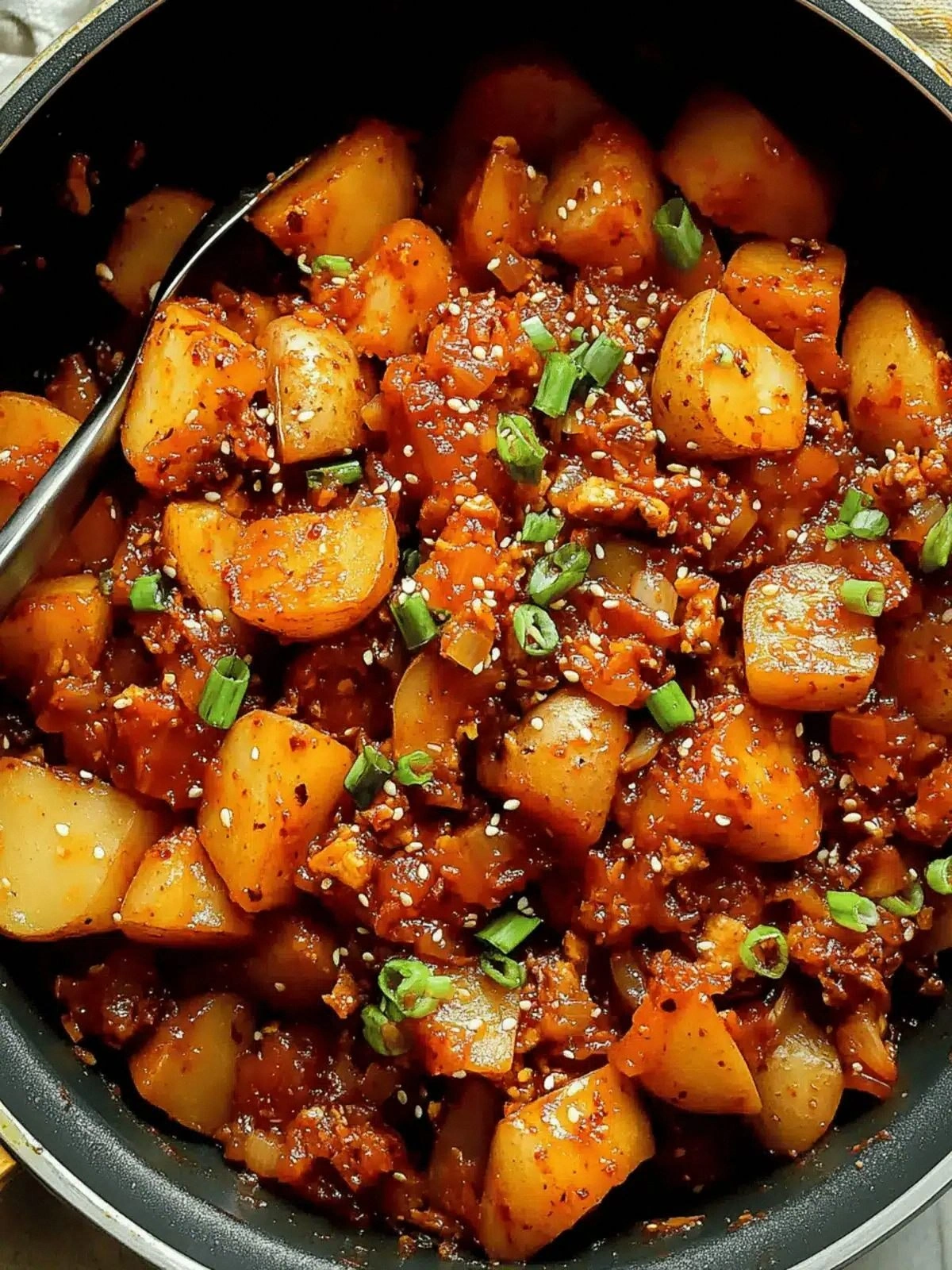
The Method — Step by Step
- First, wash the Yukon Gold potatoes thoroughly to remove any dirt. Peel them if you prefer a softer skin, but leaving the skin on adds a rustic texture. Slice the potatoes into bite-sized cubes, about 1 inch each, ensuring they’re uniform for even cooking. Let them sit in a bowl of cold water for 10 minutes to remove excess starch, which helps achieve crispiness. Pat them dry with a clean towel before moving to the next step.
- Heat a large skillet over medium-high heat and add the neutral cooking oil. Let the oil heat until it shimmers but isn’t smoking. Add the potatoes in a single layer, ensuring they have space to brown. Sauté for 5-6 minutes, turning occasionally, until they develop a golden crust. The smell should be buttery and inviting, a clear sign that the potatoes are cooking properly. Keep a close eye on them; you don’t want them to burn.
- While the potatoes are browning, mince the garlic cloves finely. This will release their aroma and flavor into the dish. In a small bowl, whisk together the soy sauce (or tamari), fish sauce, and a splash of water to create a balanced sauce. This sauce will be poured over the potatoes later to give them that savory depth. The mixture should be smooth, with no lumps of garlic or soy.
- Once the potatoes are golden, reduce the heat to medium and pour the sauce over them. Stir gently to coat each cube evenly, allowing the sauce to caramelize slightly on the surface. The potatoes should start to sizzle, and the sauce will thicken into a glossy glaze. This is the moment of truth; the aroma will intensify, and the kitchen will smell like a Korean street market.
- Add the chopped kimchi to the skillet, tossing gently to combine. The kimchi will release its juices, creating a flavorful sauce that coats the potatoes. Stir for an additional 3-4 minutes until the kimchi is heated through and the flavors meld. The mixture should look glossy and slightly steamy, signaling that the dish is nearing perfection.
- Now it’s time for the yogurt drizzle. In a small bowl, whisk the Greek yogurt until it’s smooth. Add a pinch of salt and a splash of the sauce from the skillet to season the yogurt. Drizzle the yogurt over the potatoes, allowing it to pool slightly at the bottom and then spread. The yogurt will create a creamy counterpoint to the spicy kimchi, balancing the heat and adding a silky texture.
- Sprinkle the toasted sesame seeds over the top, followed by the sliced scallions. These final touches add a crunchy texture and a fresh, oniony brightness that brightens the dish. Give the skillet a gentle stir to distribute the seeds evenly. The sesame seeds should toast just enough to release their nutty aroma without burning.
- Serve immediately while the potatoes are still hot and the yogurt is slightly warm. The contrast between the crispy exterior, the juicy interior, and the creamy yogurt creates a sensory experience that will leave everyone asking for more. Garnish with an extra sprinkle of scallions if you like a pop of color. This dish is best enjoyed fresh, but leftovers can be reheated in a hot skillet to restore the crunch.
That's it—you did it. But hold on, I've got a few more tricks that'll take this to another level…
Insider Tricks for Flawless Results
The Temperature Rule Nobody Follows
Many cooks think that medium heat is enough, but the secret lies in starting at medium‑high and then dropping to medium once the potatoes have browned. This temperature shift allows the potatoes to finish cooking without burning. If you keep the heat too low, the potatoes will steam instead of crisp. I’ve found that a quick test—drop a small piece of potato into the pan—helps you gauge the right heat. If it sizzles immediately, you’re in the zone.
Why Your Nose Knows Best
The aroma is the real indicator of progress. As the potatoes cook, the smell should transition from raw potato to a buttery, nutty scent. When the kimchi starts to steam and the sauce begins to thicken, the kitchen smells like a Korean street market. Trust your nose; if it’s not quite there yet, give it a minute longer. This sensory cue saves you from overcooking.
The 5‑Minute Rest That Changes Everything
After removing the skillet from heat, let the potatoes rest for 5 minutes on a paper‑towel‑lined plate. This step allows the steam to redistribute, resulting in an even crispness. It also gives the yogurt a chance to settle into a silky glaze. Skipping this step can leave the dish feeling uneven. I’ve seen even seasoned chefs overlook it, but the difference is noticeable.
Don’t Skimp on the Oil
Using too little oil can result in potatoes sticking to the pan, ruining the crisp. The oil also carries the flavors and helps the sauce adhere. If you’re watching fat intake, you can use a spray bottle to lightly coat the pan, but you’ll need to be careful not to under‑oil. The right amount of oil is the difference between a soggy mess and a golden masterpiece.
Finish with a Splash of Water
If you notice the potatoes drying out during the last minute of cooking, splash a tablespoon of water into the pan. The steam will help keep the potatoes moist while still maintaining the crisp exterior. This trick is especially useful if you’re cooking on a lower‑heat stove or if the pan is small. The result is a perfectly balanced texture.
Creative Twists and Variations
This recipe is a playground. Here are some of my favorite ways to switch things up:
Spicy Sriracha Kick
Swap the fish sauce for a tablespoon of sriracha to amp up the heat. The tomato base adds a sweet undertone that balances the kimchi’s sharpness. This variation is perfect for those who love a fiery bite. Serve it with a cooling cucumber salad to keep the palate refreshed.
Herb‑Infused Greek Yogurt
Blend fresh dill or parsley into the yogurt for a herbal twist. The green herb adds a fresh, bright note that cuts through the richness. It also gives the dish a pop of color that looks stunning on the plate. This is a great option for brunch or a light dinner.
Sweet Potato Version
Replace the Yukon Gold with diced sweet potatoes for a sweeter, more caramelized flavor. The natural sweetness of the sweet potato pairs beautifully with the savory kimchi. Adjust the oil slightly to account for the extra moisture. This version is ideal for a comforting fall meal.
Vegan Yogurt Drizzle
Use a dairy‑free yogurt like coconut or almond for a vegan-friendly version. The creamy texture remains, but with a subtle coconut undertone. This twist keeps the dish light and fits into a plant‑based diet. Pair it with a side of roasted chickpeas for added protein.
Kimchi Fried Rice Fusion
Turn the potatoes into a fried rice by adding cooked rice and a splash of sesame oil. The kimchi and yogurt still shine through, creating a fusion dish that’s both comforting and adventurous. This is a fantastic way to use leftover rice and add a new dimension to the flavors. Serve it with a fried egg on top for the ultimate indulgence.
Seafood Boost
Add a handful of shrimp or scallops to the skillet during the last few minutes of cooking. The seafood will soak up the kimchi sauce, creating a decadent side or main dish. The protein boost makes this dish hearty enough for a main course. Be careful not to overcook the seafood; a quick sear is all you need.
Storing and Bringing It Back to Life
Fridge Storage
Cool the potatoes completely before storing them in an airtight container. Keep them in the refrigerator for up to 3 days. The yogurt sauce may separate, so mix it back in before serving. For best results, reheat in a skillet to restore the crispness. The dish remains delicious even after a few days.
Freezer Friendly
Wrap the potatoes tightly in plastic wrap, then place them in a freezer bag. They can be frozen for up to 2 weeks. When ready to eat, thaw them in the refrigerator overnight. Reheat in a hot skillet, adding a splash of water to keep them moist. The texture will stay close to fresh, making it a convenient meal prep option.
Best Reheating Method
The key to reheating is to use a hot skillet rather than a microwave. Place the potatoes in the pan over medium heat, stirring occasionally until they’re heated through. Add a tablespoon of water to create steam and help maintain moisture. Finish with a quick drizzle of yogurt to restore the creamy finish. This method preserves the crispness and flavor integrity.