I remember the night my kitchen turned into a battlefield: I’d just opened a bag of almond flour and, in a moment of reckless enthusiasm, tossed it into a mixing bowl, thinking I could handle the chaos. The next thing I knew, the flour had sprayed the ceiling, the powdered sugar had settled in a glittery cloud, and I was staring at a mess that looked less like a recipe and more like a dessert apocalypse. But that disaster sparked a craving I couldn’t shake—an urge for something sweet, delicate, and unmistakably citrusy. The idea of pairing the bright, zesty notes of mandarin orange with the airy, buttery texture of a macaron seemed like the perfect antidote to my flour‑filled frustration.
Picture this: the kitchen fills with the warm, nutty aroma of toasted almond flour as it gently caramelizes in a pan, the air tinged with the sweet, slightly tart scent of freshly squeezed mandarin juice. Your ears catch the soft crackle of the batter as it settles, the faint hiss of the oven preheating, and the rhythmic clack of the mixing spoon against the bowl. Your tongue anticipates the first bite—a crisp, shell‑like exterior that gives way to a cloud of buttercream bursting with citrus, a harmony of sweet and tang that lingers on the palate. The texture is a dance between the firm crunch of the shell and the silky, melt‑in‑your-mouth filling, a contrast that feels like a symphony of sensations.
What makes this version stand out is that I’ve taken every element—from the almond flour to the filling—and elevated it with a few intentional tweaks that most recipes overlook. I’ve used a blend of fresh mandarin zest and juice that gives the macaron a depth of flavor you rarely find in store‑bought versions. The batter is carefully aerated to achieve that coveted “feet” effect, and the filling is a citrus‑infused buttercream that balances sweetness with a bright, refreshing finish. I’ve also introduced a subtle almond extract to deepen the nutty undertones without overpowering the citrus, and a touch of lemon zest to cut through the richness. The result? A macaron that feels like a luxurious, bite‑size piece of sunshine.
And here’s the kicker: this isn’t just another cookie recipe. It’s a culinary experiment that turns a simple kitchen mishap into a showstopper. I dare you to taste these and not go back for seconds. Picture yourself pulling them out of the oven, the whole kitchen smelling incredible, the tiny shells glistening like polished gems. Let me walk you through every single step — by the end, you’ll wonder how you ever made it any other way.
What Makes This Version Stand Out
- Flavor: The dual use of mandarin zest and juice creates a vibrant, layered citrus profile that feels alive and fresh. Every bite delivers a burst of sunshine.
- Texture: The batter is meticulously aerated to produce the classic “feet” and a crisp, airy shell that cracks pleasantly when you bite into it.
- Simplicity: Despite the sophisticated flavor, the recipe uses only pantry staples plus a few fresh ingredients, making it approachable for bakers of all levels.
- Uniqueness: A subtle almond extract and a dash of lemon zest give it a nuanced depth that most macaron recipes miss, turning ordinary into extraordinary.
- Audience: Whether you’re a seasoned pastry chef or a weekend baker, the result is a showstopper that impresses friends and family alike.
- Ingredient Quality: Fresh, high‑quality almonds, pure mandarin juice, and real vanilla extract make the difference between good and unforgettable.
- Method: The step‑by‑step technique ensures even the most anxious baker can achieve the perfect shell and filling.
- Make‑Ahead: These macarons can be prepared a day in advance, letting flavors meld while you focus on other tasks.
Alright, let’s break down exactly what goes into this masterpiece…
Inside the Ingredient List
The Flavor Base
Almond flour and powdered sugar form the backbone of the macaron shell. Almond flour provides the nutty undertone and gives the batter its structure, while powdered sugar balances the sweetness and helps create that smooth, glossy finish. If you skip either, the shells will either crumble or taste too sugary.
Choosing the right almond flour is key—look for a fine, unsifted variety that’s free of additives. The finer the grind, the smoother the batter, and the more even the rise. If you’re using a coarse grind, sift it once to avoid a gritty texture.
For a richer flavor, you can toast the almond flour lightly in a dry skillet until it just starts to turn golden. This adds a subtle toasty note that pairs beautifully with the citrus.
The Texture Crew
Egg whites are the lifeblood of macaron shells. They provide the structure and create the “feet” that give the shells their characteristic shape. Whisk them to stiff peaks, but don’t overdo it—over‑whisked whites can become dry and brittle.
Granulated sugar is folded into the whites to stabilize the foam and add a slight crunch to the shell. The sugar must be fully dissolved; if any granules remain, they’ll show up as gritty spots in the finished product.
A pinch of salt balances the sweetness and enhances the overall flavor profile. It’s a small detail that makes a big difference, especially when you’re working with bright citrus notes.
The Unexpected Star
Mandarin zest is the secret weapon that gives these macarons their signature brightness. The zest carries the essential oils that provide a punchy citrus flavor without the acidity of the juice. Use a microplane for the finest, most fragrant zest.
Fresh mandarin juice is added to the batter for moisture and a subtle, sweet-tart undertone. The juice should be strained to remove pulp and seeds, ensuring a smooth batter. If you can’t find fresh mandarins, a high‑quality, natural orange juice works as a close substitute.
The combination of zest and juice creates a harmonious balance—zest for aroma, juice for depth. This duo is what sets these macarons apart from the generic citrus pastries.
The Final Flourish
Butter and heavy cream form the base of the filling, giving it a silky texture that melts in your mouth. Butter adds richness, while the cream keeps the buttercream light and fluffy.
Powdered sugar is folded into the butter cream to achieve a smooth, spreadable consistency. The sugar must be sifted to avoid lumps, which could ruin the delicate finish of the filling.
A final touch of mandarin zest and a dash of almond extract in the filling deepens the citrus profile and adds a nutty undertone, creating a complex flavor that lingers pleasantly.
Everything's prepped? Good. Let's get into the real action...
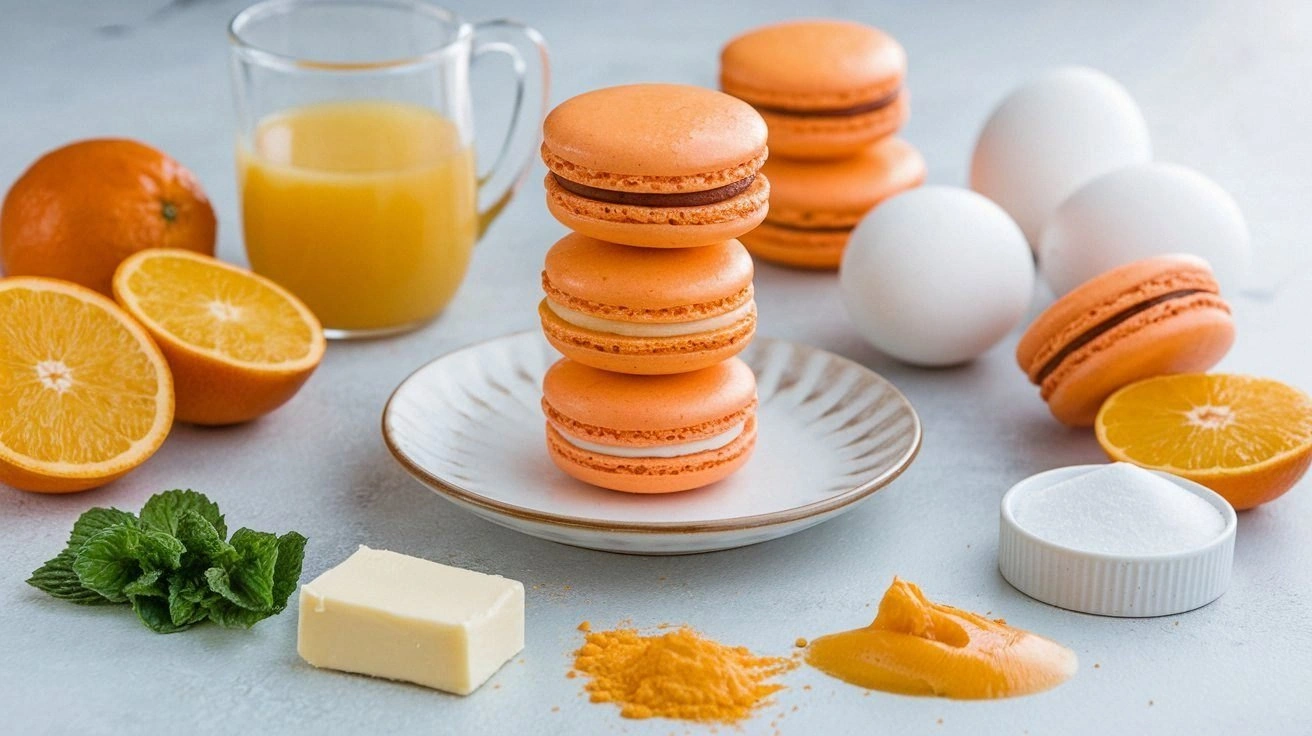
The Method — Step by Step
- First, preheat your oven to 300°F (150°C) and line two baking sheets with parchment paper. While the oven warms, toast the almond flour in a dry skillet over medium heat until it turns a light golden brown, about 3–4 minutes. This step releases a nutty aroma that will carry through the final product. Once toasted, set aside to cool.
- In a mixing bowl, whisk the egg whites to soft peaks. Gradually add the granulated sugar, a tablespoon at a time, until the whites hold stiff peaks and the mixture is glossy. The sugar must be fully dissolved; you can test this by rubbing a small amount between your fingers—if it feels gritty, continue whisking.
- Sift the toasted almond flour and powdered sugar together, then fold into the meringue in three additions, gently incorporating each time until the batter is smooth and shiny. The batter should flow slowly off the spatula and form a thick ribbon that holds its shape for a few seconds before flattening.
- Add the fresh mandarin zest, juice, vanilla extract, and a pinch of salt to the batter. Fold until just combined; over‑mixing can deflate the batter. The batter should look glossy and be slightly thick, with a hint of citrus aroma.
- Transfer the batter to a piping bag fitted with a round tip. Pipe small, even circles (about 1.5 inches in diameter) onto the prepared parchment sheets, spacing them about 1.5 inches apart. Tap the sheet gently on the counter to release any air bubbles and let the shells rest for 30–45 minutes, or until a thin film forms on the surface.
- While the shells rest, prepare the filling. Melt the butter in a small saucepan over low heat, then remove from the heat and stir in the heavy cream until fully blended. Allow the mixture to cool to room temperature before whisking in the powdered sugar, mandarin zest, almond extract, and a pinch of salt. Fold until smooth and silky.
- Return the parchment sheets to the oven and bake for 15–18 minutes, or until the shells have risen and the tops are set but not browned. Remove and let cool on the sheet for 5 minutes, then transfer to a wire rack to cool completely.
- Once the shells are cool, pair them in pairs of similar size. Pipe a small amount of the citrus buttercream onto the flat side of one shell, then sandwich with the second shell, pressing gently to spread the filling. Repeat for all shells.
- Place the finished macarons in an airtight container and refrigerate for at least 2 hours before serving. This allows the flavors to meld and the shells to soften slightly, creating the classic macaron experience.
That's it — you did it. But hold on, I've got a few more tricks that'll take this to another level...
Insider Tricks for Flawless Results
The Temperature Rule Nobody Follows
Many bakers bake macarons at the temperature indicated on the oven, but the real secret lies in the oven’s actual heat. Use an oven thermometer to ensure your oven is truly at 300°F (150°C). An oven that runs 20°F hotter can ruin the delicate rise and give you a burnt shell.
Why Your Nose Knows Best
When the batter is ready, it should emit a sweet, nutty aroma with a hint of citrus. If it smells overly sweet or has a raw egg scent, the batter isn’t fully mixed or the egg whites haven’t reached the right stiffness. Trust your nose to tell you when it’s ready.
The 5-Minute Rest That Changes Everything
After piping the batter, let the shells rest for exactly 30–45 minutes. This step allows the surface to dry just enough to form a film, which prevents the shells from spreading during baking. Skipping this can lead to flat, uneven macarons.
The Right Mixing Technique
When folding the almond flour into the meringue, use a gentle, slicing motion rather than a circular whisking. Over‑mixing can collapse the structure, while under‑mixing leaves lumps. The batter should be glossy and flow slowly off the spatula.
The Final Touch of Zest
Right before piping the filling, give the buttercream a quick stir to reincorporate any settled zest. A tiny burst of citrus aroma will lift the entire flavor profile, making the final product feel fresh and vibrant.
Creative Twists and Variations
This recipe is a playground. Here are some of my favorite ways to switch things up:
Lemon‑Honey Macarons
Swap the mandarin zest and juice for fresh lemon zest and a drizzle of honey in the batter. The honey adds a subtle floral sweetness that pairs beautifully with the tart lemon, creating a bright, refreshing treat.
Chocolate‑Citrus Fusion
Add 1/4 cup cocoa powder to the batter for a dark chocolate base, and mix in a tablespoon of orange liqueur. The chocolate depth balances the citrus brightness, offering a sophisticated flavor profile.
Almond‑Lavender Delight
Incorporate 1 tablespoon of dried lavender buds into the batter and a pinch of almond extract. This floral twist adds an aromatic layer that elevates the nutty undertones.
Matcha‑Mandarin Macarons
Stir 1 teaspoon of matcha powder into the batter for a subtle green tea flavor. The earthy undertones complement the citrus, creating a unique, balanced taste.
Salted Caramel Citrus
Swap the mandarin filling for a salted caramel buttercream. The caramel’s sweetness and the salt’s umami contrast with the citrus shells, producing a decadent, multi‑layered flavor.
Berry‑Infused Surprise
Add 1/4 cup fresh raspberry puree to the batter and a splash of vanilla extract. The berries bring a tart, fruity note that pairs wonderfully with the almond base.
Storing and Bringing It Back to Life
Fridge Storage
Place the macarons in an airtight container and refrigerate for up to 3 days. Before serving, let them sit at room temperature for 20 minutes to restore their airy texture. The citrus flavors will intensify as the shells soften.
Freezer Friendly
Wrap each macaron individually in plastic wrap and place them in a freezer bag. They’ll stay fresh for up to 2 weeks. Thaw in the fridge overnight and bring to room temperature before serving.
Best Reheating Method
To revive stale macarons, preheat your oven to 250°F (120°C) and bake them for 5–7 minutes. Alternatively, microwave them on low power for 10–15 seconds, then let rest on a paper towel to maintain crispness. Add a tiny splash of water before reheating to create steam, which helps bring back the soft interior.